Last Autumn, I left behind the bright lights and bustling streets of Lincoln and moved back to Louth, the Wolds market town where I took my first half-hearted steps towards adulthood. When I moved into my new house I found a suspicious looking plant in the back garden, hiding behind a bush as if it knew it wasn’t supposed to be there. Before I’d had the chance to investigate online, nearby parents informed me that it was a Field Maple and shouldn’t be trusted. Given time and sunlight, they warned, it would send roots into the foundations of the house and bring the whole thing crashing down. I quite liked the thought of living in a building that was being reclaimed by nature, but the decision was taken out of my hands when I came home from work one day to find it sat glumly in a plant pot. Confined to a terracotta jail cell, it didn’t look like the sort of thing that could uproot bricks and concrete, but it seemed churlish to reinsert it into my vegetable patch. Instead, I made a promise to relocate it to my orchard and then immediately forgot about it. The next time I wandered down the garden, which was probably at least three months later, I found it standing leaf-free and lonely, to all appearances long dead.
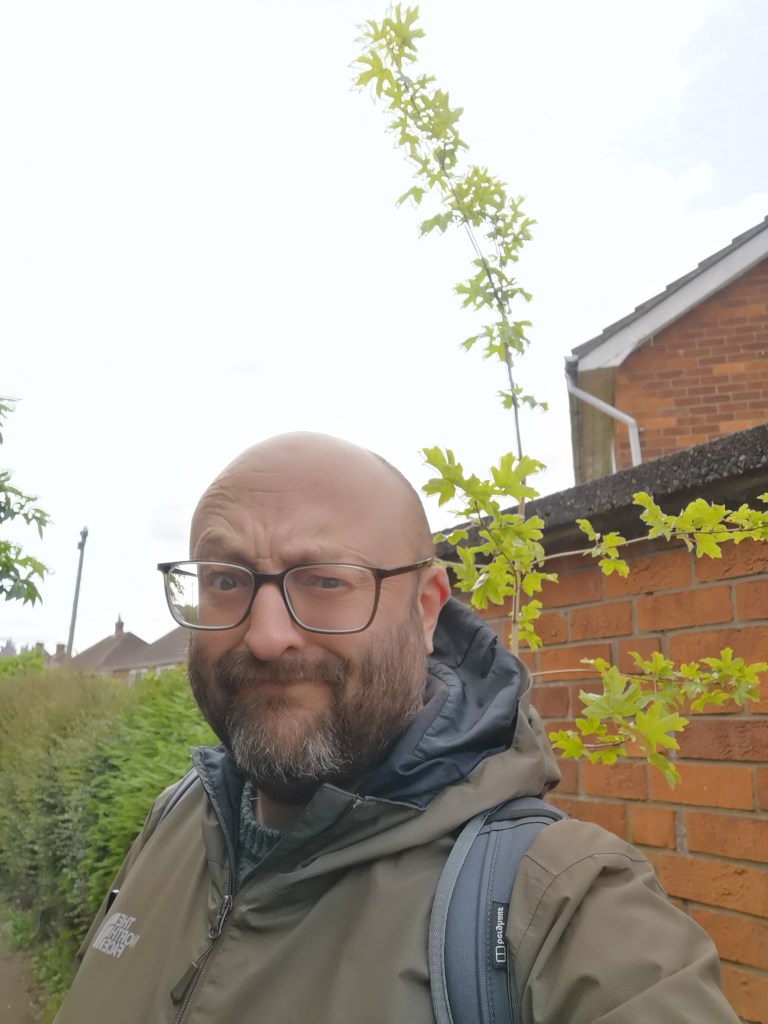
If I was possessed of even one-tenth of the work ethic of my fathers, that would have been the end of this story. Fortunately, I am an indolent slug and, instead of slinging it and reclaiming the plant pot, I left the dead tree alone. Amazingly, the following spring, leaves started to appear on its spindly branches, proving yet again the virtue of abject laziness. I waited for a weekend when my dad was away, knowing that if he was around he would insist on doing things properly despite the extra work that always involves, and then kicked myself into gear.
I’ve got no suitable carry-racks on my pushbike so I slid the tree and roots out of the pot and into my rucksack for the hike. It weighed a ton. I could have shaken off some of the earth but I didn’t know what the root situation was and didn’t want to take any risks. I’m still not entirely sure why I thought bare-rooted in a Berghaus was a better bet than just carrying it in the plant pot, but never mind.
Instead of de-segregating the apple trees, I had decided to plant the Maple in a prime streamside location that I was eyeing up for a second stab at orcharding. I had done a bit of work clearing nettles in the summer and buried my dead cat there so he could keep me company while I worked. Since then, I’d done nothing, and it was immediately apparent that nature had not followed my lead. Clumps of nettles filled the site and there was barely an inch of non-stinging ground to set foot on. I had to fight my way to a suitable tree-planting spot, casting embarrassed glances towards Stan’s unmarked grave as I waded through the waist-high weeds and nettles.
The ground was soft enough that digging a hole for the new resident was simple enough but every YouTube video I’d ever watched had stressed the importance of watering after planting. Sadly, I had forgotten to bring a watering can and the next twenty minutes saw me trying with little success to clamber up and down the nearby bank with a leaky carrier bag of stream water. I won’t describe my craptastic escapades in detail but suffice to say it was not an edifying spectacle.
With the tree in place and the surrounding dirt marginally damper than it was when I arrived, I stepped back to admire my handiwork. It didn’t fill me with confidence. The transplanted Maple looked painfully exposed, its spindly branches doing a poor job of fending off the surrounding weeds. Even some of the nettles had thicker stems. Admittedly the carrier bag I’d repurposed from crap water carrier to crap tree guard wasn’t helping. Maybe the weeds would hide it from predators. Anyway, by that time I’d been labouring for nearly an hour and had had enough. Home I went and thought little of the Maple in the weeks that followed.
That was then. Fast forward a few months and I’m dragging myself through the front door on the first frosty day of winter 2023. My plan is to slowly edge my way along the lethally-icebound pavements of eastern Louth and check up on my apple trees before the winter does for them at last. I make faltering but steady progress to the main road but then the uneven footpaths seem to dry up, defrosted by the warming light of the Sun’s rays. Inevitably, I am on my arse seconds later, betrayed by hidden ice, trying not to begrudge the laughter of a passing motorist. I spy a Grimsby Town sticker in the back of his car so I let him off. My discomfort is probably the first good laugh he’s had in years.

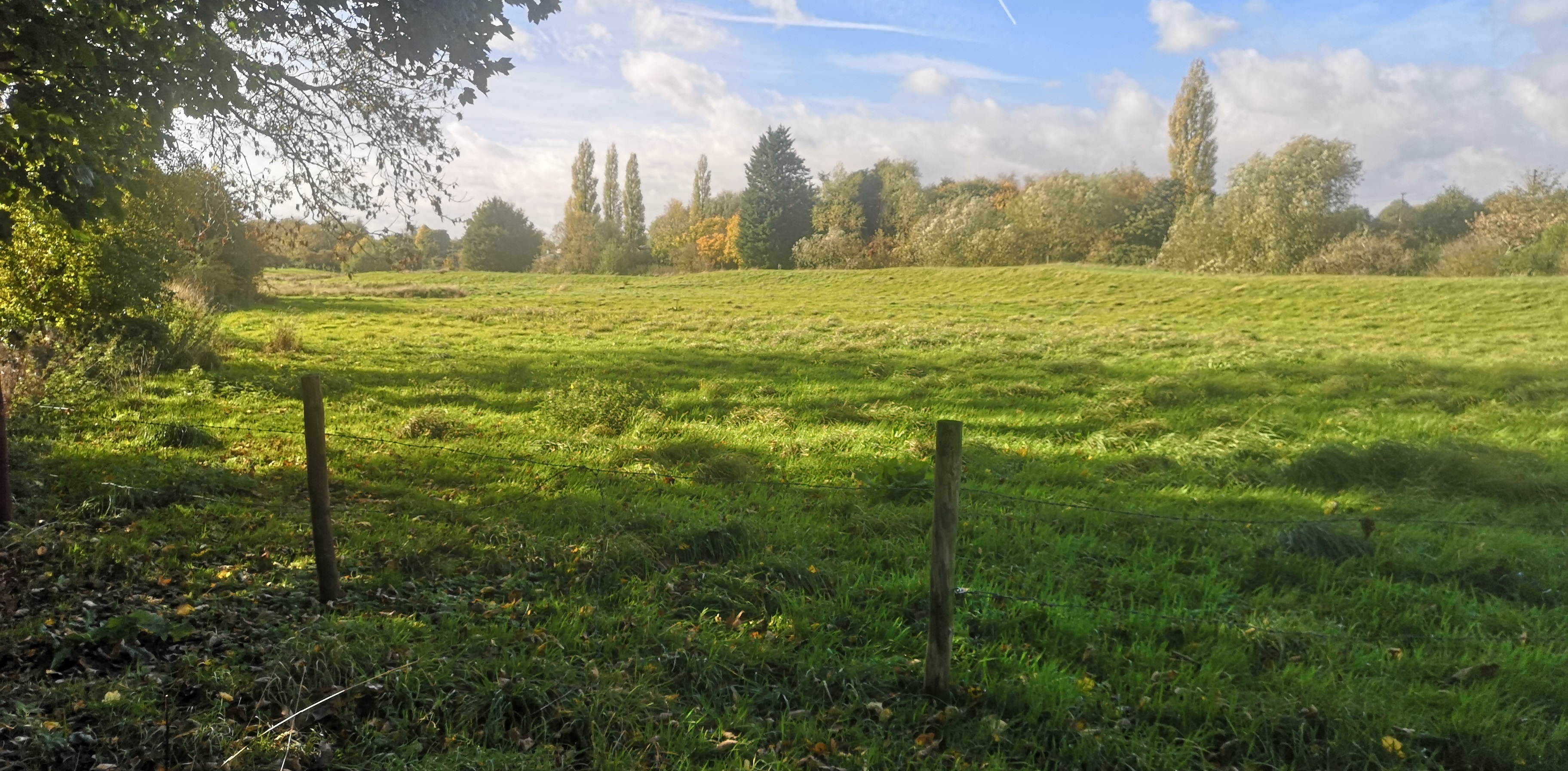
The rest of the journey is slow but eventless and the field looks majestic in the early morning frost. Even the normally murky canal has a sort of icy freshness to it. After quickly checking on the orchard proper, I march off across the frozen grass and weeds towards my Maple. I can’t help but notice how much neater the horse paddock looks than the wilds beyond. Dad and Barb have both been saying we need to do something with this half of the acreage or it will just pass to rack and ruin. Maybe they’ve got a point.
Despite all expectation and reason, the Maple is still alive and even has a few leaves left, in defiance of the onrushing winter. The grass needs cutting and the weeds need murdering but the vital sprig is a heartwarming sight. After being abandoned in my garden for months and then being dumped in a patch of earth it had never seen before, it has lived. Not thrived exactly, but certainly not stumbled. It looks well.
Field Maples, according to the Woodland Trust, can live for upwards of 300 years. I figure that if I’m lucky, and can lay off the kebabs for a bit, I might get to see a tenth of its lifespan. By then it could be sixty feet tall and casting shade over a thirty foot circle of earth. I start imagining another spray of trees planted across the acreage, each with space to reach its potential. There would be apples and pears for fruit, oak and ash for style and silver birch because they grow quickly and I’m impatient. It’s an unbidden but enticing thought. I’d have to mow around the trees regularly and it’s a lot of ground to cover with a push mower but it’s doable. It’s not like I work much or have friends to waste my time visiting. I would never get to see it in its full glory, and the odds are that property developers will level the area once I’m pushing up daisies, but I could give it a chance. I could do my bit.
The Woodland Trust, more poetic than I’ll ever be, describes the Field Maple as a “Pollution fighter, autumn stunner, syrup maker.” Nice. Welcome to Ticklepenny Field, my friend. Maybe you’re the start of a new project.


 The Appeal of Mrs Toogood
Leave a comment