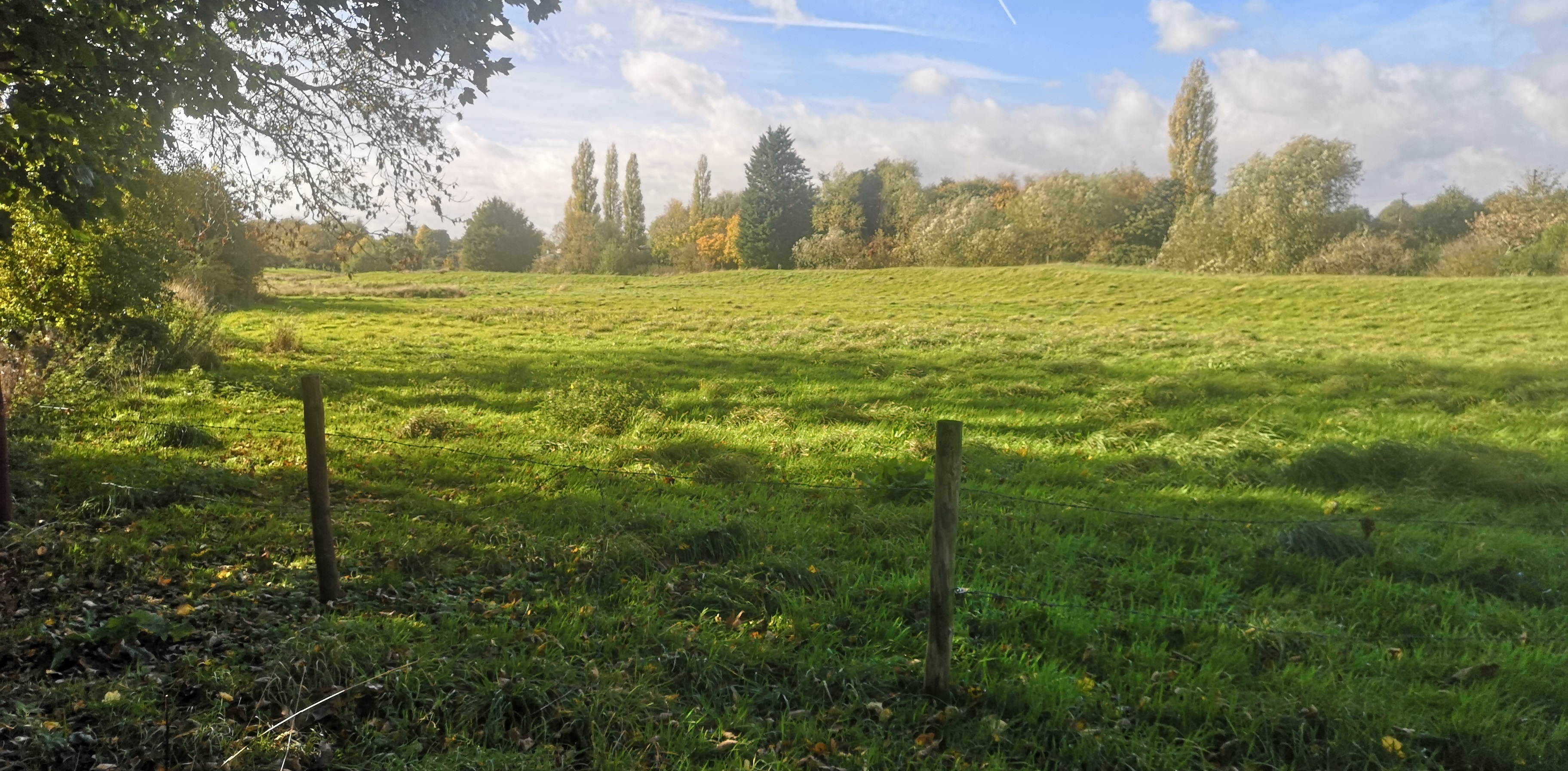
Last weekend I was due to attend a pruning workshop held by the National Trust over in Styal, Cheshire. The trip would have involved getting up at 5am, taking a taxi to Grimsby in time for the first train heading west and then a two mile forced march to make the start time. And then doing it again in reverse to get home in time for Match of the Day. As well as all that faff, it involved a cash outlay that I really couldn’t justify so, instead, I ended up staying at home and watching a load of videos on YouTube instead. How hard could it be? Hack off a few branches and then have a nice sit down and share a cheese sandwich with the local wildlife.
I veered towards informed looking videos, including one by the lady that was to host the National Trust in-person effort, rather than the traditional YouTube fare of mad looking American hermits who insist on doing everything with petrol-guzzling chainsaws. What I learned confirmed my initial thoughts for the most part; take no more than a fifth, remove diseased branches first, followed by ones that crossed other branches and then ones that grew inwards towards the trunk rather than outwards towards fresh air and daylight. I resolved to remove as little as possible, maintaining the primal wildness of my orchard where possible.
Despite the advice of literally every book and expert I consulted over the years, I still nursed an intractable, delusional belief that the trees didn’t want me to prune them. They seemed to do okay in the wild and I didn’t want to impose some kind of hierarchical relationship where what I say goes and the trees are expected to bow to my will. If they want branches arranged in crossing patterns with no discernible shape or structure, I say let them. Except that I think it might be bad for them. I remember cropping fruit that the trees had barely managed to keep off the ground last Autumn, and even now it’s impossible not to notice branches whose tips are worryingly close to the ground.
The final barrier to regular pruning, and its influence on my decision-making cannot be understated, is that I am fantastically lazy. I’d cite a few examples to prove my point but time is limited and I don’t want to put even more people off me.
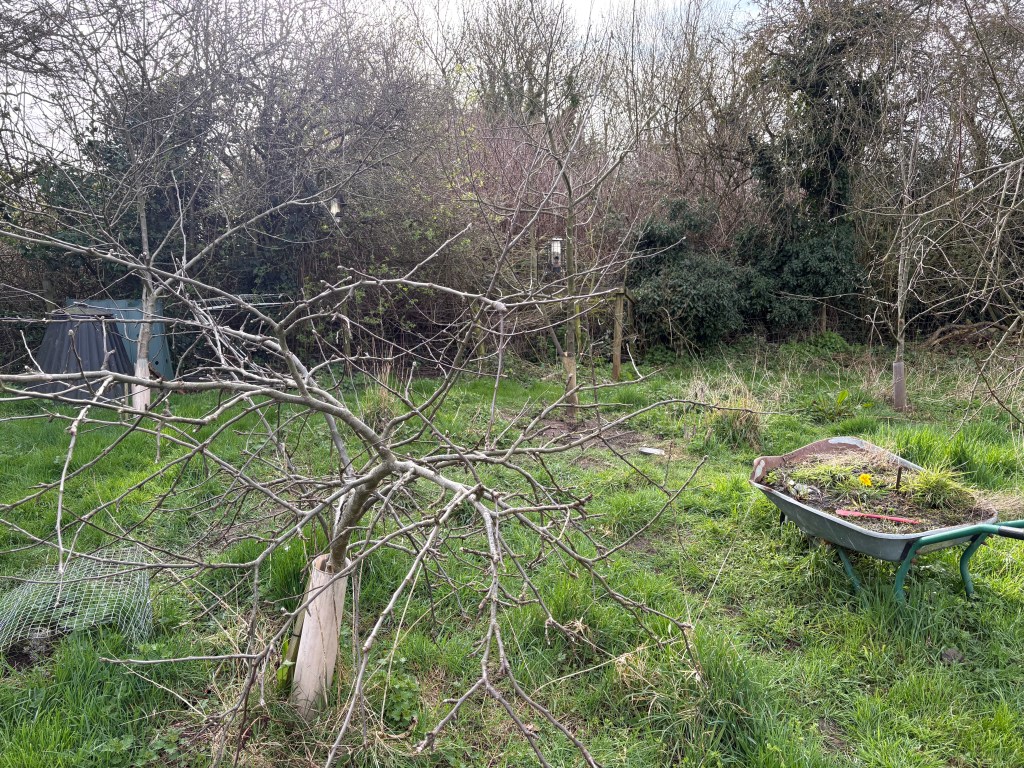
Despite all my reservations, I am determined to make this year a year like no other for Ticklepenny Orchard. Grass will be cut, grafts will be grafted and, as God is my witness, branches will be pruned. With that solemn oath in mind, as soon as I wake up to a day of almost bearable weather, I grab my tools, rewatch the best of the videos I found and set off. Here goes. Before this day is out, the job will be done.
It’s about a mile from door to field through residential areas on the coastal side of Louth. Are you allowed to walk through the streets carrying cutting tools? Am I about to be arrested for plotting burglary? I fear the worst as I notice an approaching jam sandwich on Eastfield Road, but the police roll past without even slowing down so I think I’m in the clear. I probably don’t look like the breaking and entering type; my rucksack is too small to carry much loot.
Over at the field, the Sun is beaming down and the air is filled with the sounds of nearby village tennis.
“Well done” shouts a lady blessed with the received pronunciation of 1960s news presenters.
Someone is being taught the basics of the sport, probably a child judging by the endless stream of encouragement. I imagine it’s the only way to stop them running back to their Nintendo GameStations or whatever device is all the rage these days.
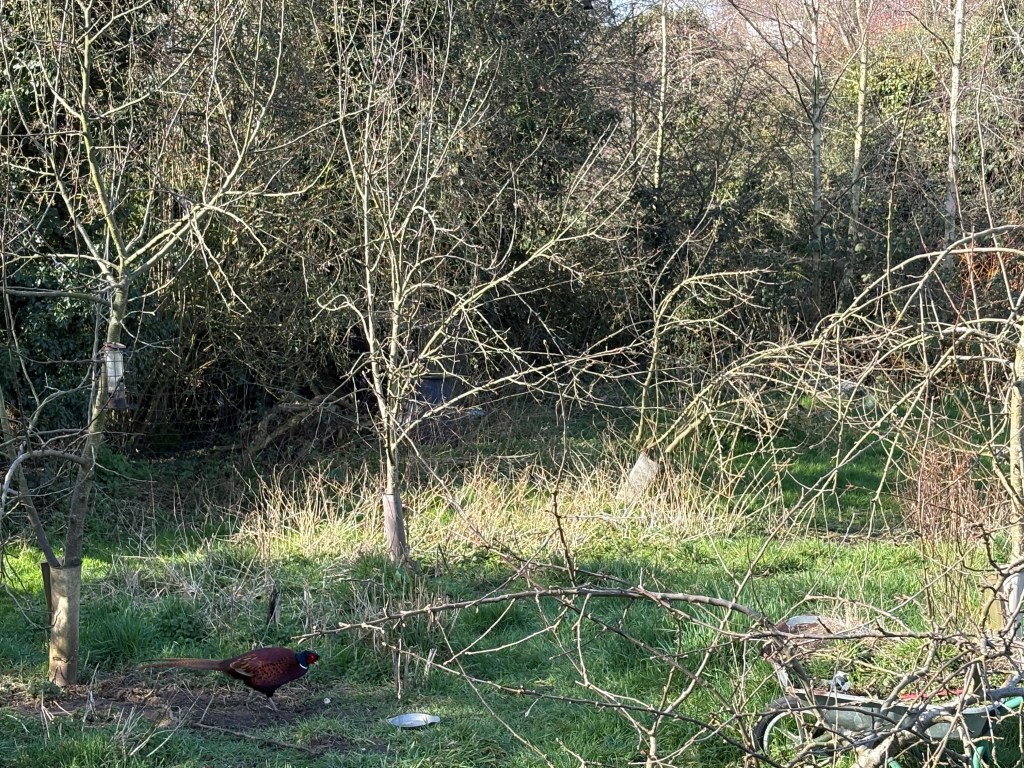
There is also birdsong, glorious Blackbird trills and the staccato fury of hordes of Sparrows lurking in the hawthorn. Every so often one moves and catches my eye. A pheasant is mooching about the orchard, occasionally pecking at the metal tray of birdseed left out by Barb. He is not fazed by me turning up and unloading a small armoury of sharp objects. At one point he wanders closer for a better look but eventually leaves me to my own devices.
I sense a murmur of anxiety from the assembled throng of trees. Is it nerves or excitement? It’s difficult to tell. I’m reminded of haircut day when I was a grufty teenage headbanger. It was clear to all and sundry that I needed one and I think I felt better without all those split ends and dry crinkly curls but did that mean I enjoyed or was grateful for the process? I’m not sure. Will my trees ever trust me again? Or have they already given up on me for letting them get into this sorry state in the first place? If I can only take a bit off without stressing them, then today is only the beginning of a lengthier endeavour.
It takes me about five hours in total to get everything sorted, although I don’t work with any real urgency or pace. Eschewing the traditional “finish one and then move on to the next” approach favoured by proper gardeners, I instead wander haphazardly from tree to tree, removing a branch here and there, lobbing them onto piles nearby. I’ll tidy up another day. Without onlookers to urge me forwards, I take frequent breaks to admire my handiwork and wish I’d brought something to drink. Blimey, a pint of cider wouldn’t half go down well. Two years ago, I wouldn’t have thanked you for the stuff but now I’m fantasising about scrumpy with bits floating about in it. Just goes to show what you can achieve if you put your mind to it.
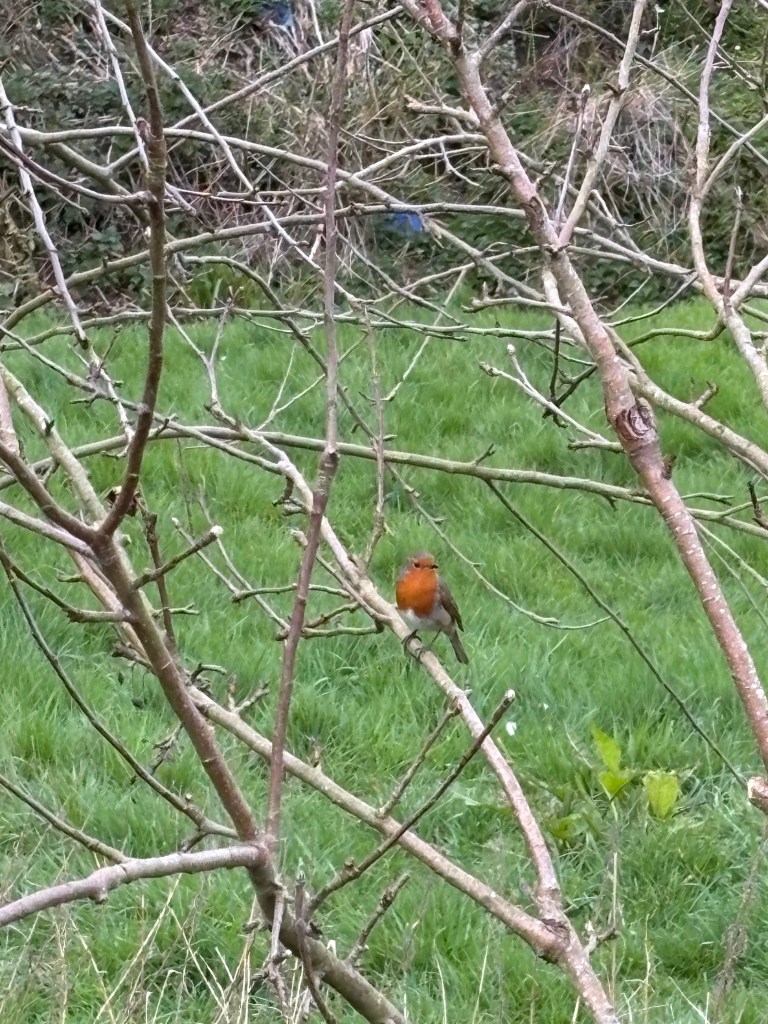
Later on I’m joined by my cider-brewing mate Stephen and then a Robin that flits merrily between the pruned trees. I’m delirious at the sight and point out to Stephen that the Wassail must have done the trick. He spouts some cynical nonsense about Robins being common in such places. I take no notice and salute my orchard guardian enthusiastically, wearing out the camera button on my phone in tribute.
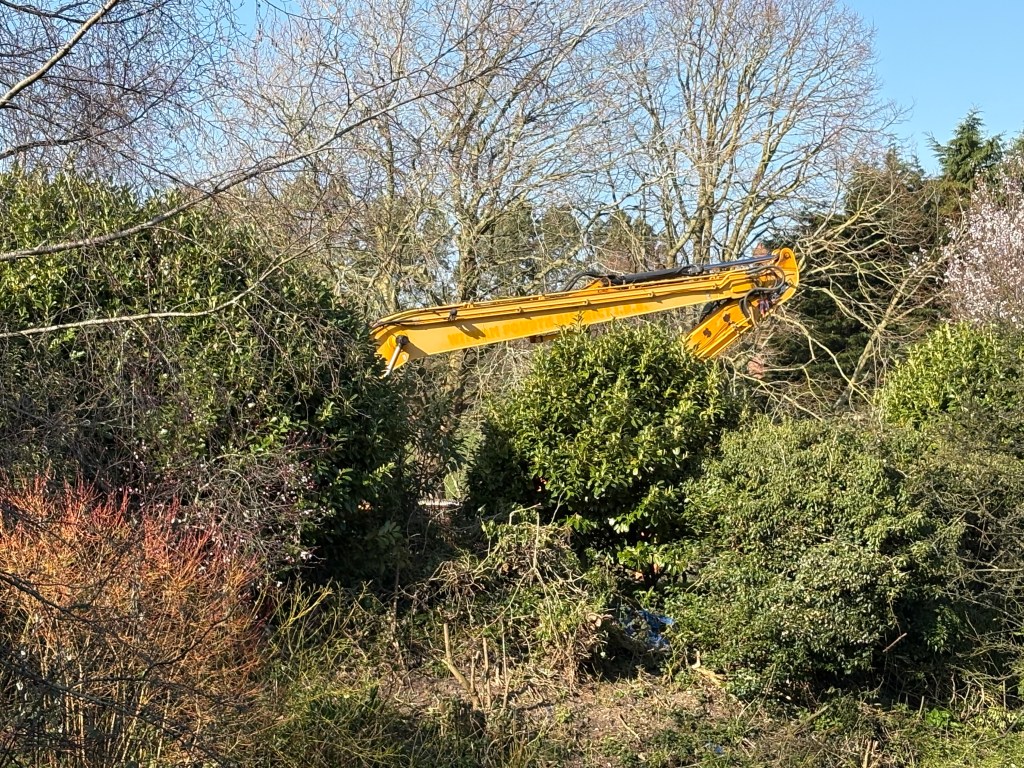
The Environment Agency interrupt me briefly by driving a yellow hedge trimming behemoth along the canal path. It might be sunstroke but to me it looks like a robotic dinosaur breaking through the tree cover. It’s not though; it’s just a dirty great petrol engine attached to extendable whirring blades. It distracts me for a few seconds but I’m soon back to my shears and loppers. A traditional approach would lay down a clear finishing post but my chaotic meanderings mean I’m just waiting to feel like I’m about done. Despite all my research, it’s still more art than science. There’s another thick branch I could do with removing from Dr Clifford but I’m already worried that I’ve taken too much.
Eventually the thing that stops me is a few fat drops of rain and a phone app that promises more coming. I’m mostly happy with where I’ve got to today but there’s more that could be done. I’ll try to crack on earlier next year; there are buds promising growth and fruit on several of the branches I’ve removed and I grieve for all this wasted growth energy. It’s a good job I’ve not had kids. They’d have had hair like yetis and fingernails like spades.
As we pack up and say farewell to the horses, Stephen spots what he claims is a Great Tit on a bird feeder. It’s by no means an outrageous claim but I end up having to take his word for it. I spin around but get only the briefest glimpse of something small launching itself into cover. It returns as soon as my back is turned, prompting much hilarity on the part of my so-called friend.
“He doesn’t like you,” he says, with a chortle.
He makes an interesting point; I do tend to cause panic in birds even when I’m making an extra effort not to look too much like Worzel Gummidge on bath day. Many’s the time I’ve tried to stand quietly in my garden only for every bird within line of sight to hurtle heavenwards. The Robin though, now he’s a different story. He sits still and unflappable, watching me with his baleful left eye.
It’s not just because they are fiercely territorial little creatures, giving no heed to how big and threatening you are; it’s because he made a pledge when I sang the Wassail song and left cider-soaked toast in the highest branch of the oldest tree. The type of deal you don’t go back on. One that has its roots in a time when songs sung in forests in the dead of night still meant something.
He’s a common old garden bird my Robin but he’s also more than that to those that choose to believe it. He’s doing the thing he promised, watching lanky interlopers take swords to the trees he’s sworn to protect. I back away from him and his orchard kingdom like I would from a boring human monarch, respectfully and slowly. It wouldn’t do to upset him.

 The Appeal of Mrs Toogood
Leave a comment