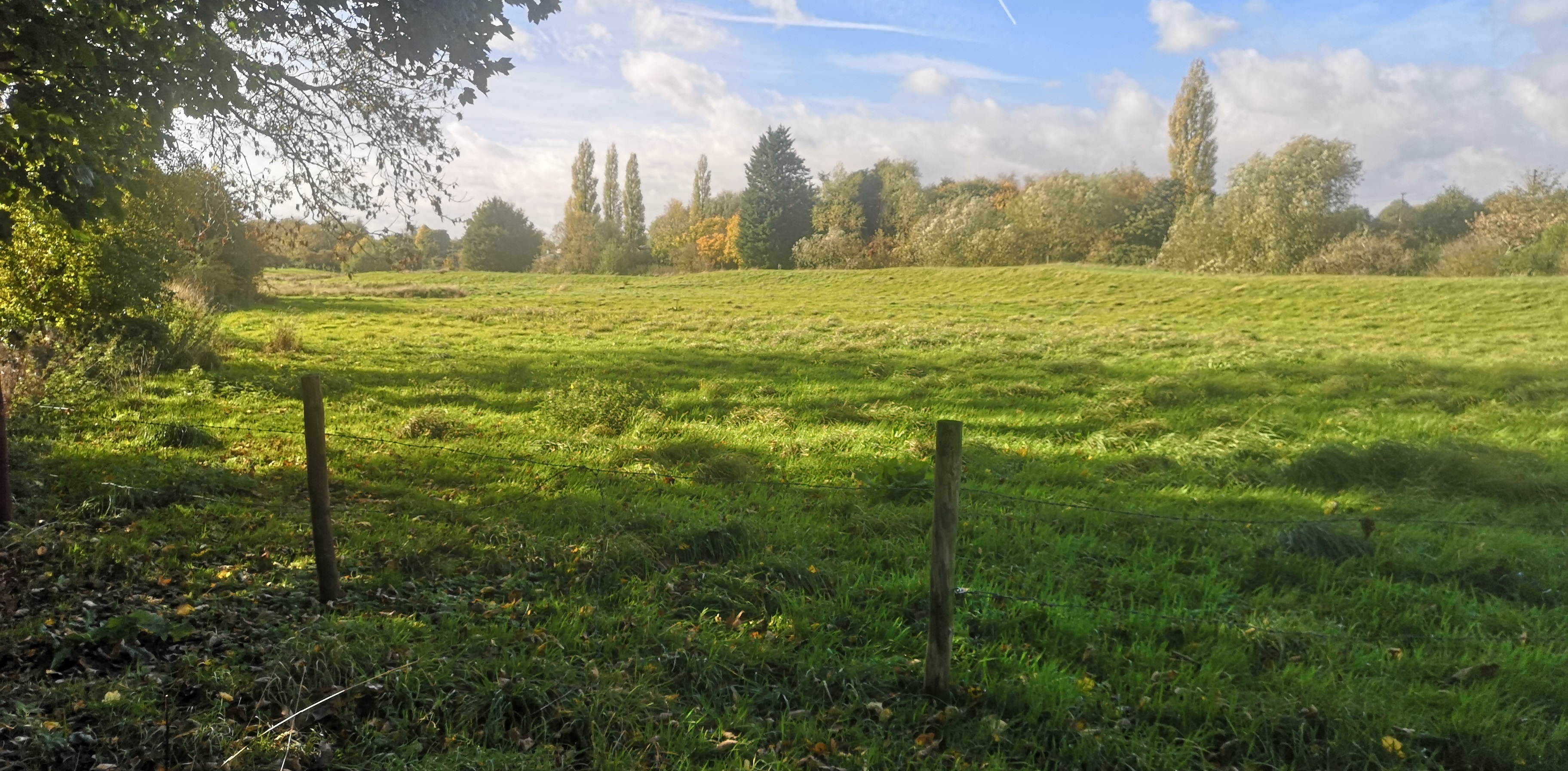
If I’m going to name my orchard after it, and that’s by no means a done deal, I’ve decided I should know a bit more about Ticklepenny Lock. To that end, I hied me hence to the Lincolnshire Archive and did some research. By which I mean that I read a couple of manuscripts that more learned people than me wrote and more industrious people than me retrieved from the vault.
The main source of information was a family history of the Ticklepennys, written by one Roy Taylor. Roy’s father took his family on a trip to Louth and Keddington in the late 1950s and left a note in a local church asking for information about his ancestors. Some weeks later an anonymous package arrived at their home in Wales stuffed full of marriage and birth certificates, baptisms, newspaper cuttings and all manner of information. That envelope inspired Roy to investigate the full history of his family and consequently enabled me to shamelessly plagiarise his hard work and industry for the sake of my inept bloggery.
Strap yourselves in. It’s quite the ride.
Roy’s genealogy of the Ticklepennys is a prodigious piece of work that extended way back into the 16th century. I, however, am a slack jawed lightweight and the part of it I could be arsed to read only went back to 1735 when Alice Asterby married local farmer Joseph Ticklepenny. The happy couple promptly began filling the earth with sons and daughters. Years later, their reproductive imperative fulfilled, they decided to defy convention and hand the family farm on to their youngest son, Thomas.
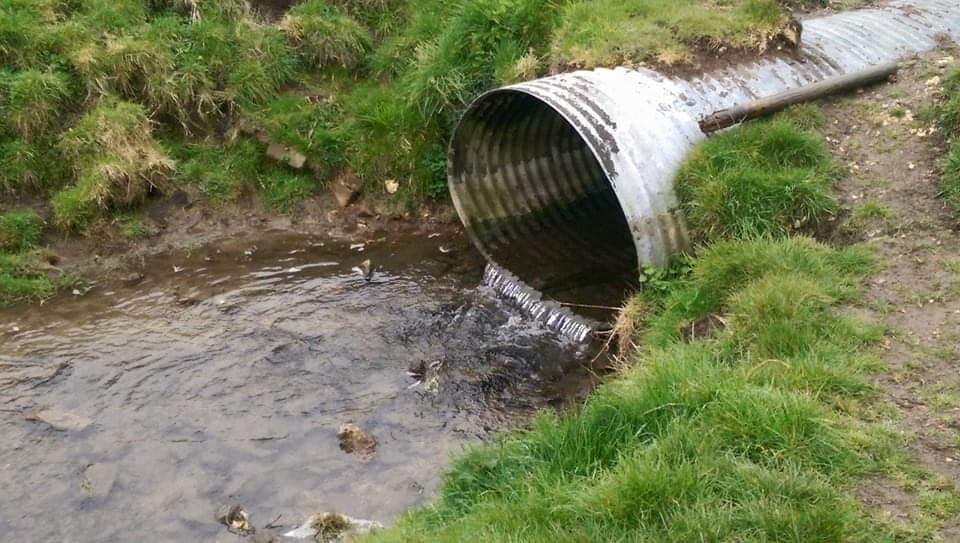
Whilst Thomas innocently farmed his fields, the English parliament decided the time had come for them to meddle in local affairs. They passed the Louth Navigation Act of 1763 and determined that a canal would pass through Ticklepenny farmland on its way to the local town, Louth. The canal was to broadly follow the course of the River Lud from which the place gets its name. Hlud means fast flowing river. I present therefore a picture of the raging torrent responsible:
The canal itself was dug by hand and all the dirt moved in wheelbarrows. It took a while. (Interestingly, two years ago, the same cutting edge methods were used by me and my dad to move approximately 17 tons of earth and rock to build a bridge in the field. It’s nice to know some things never change.)
When the full length of the canal opened in 1770, Thomas was employed as keeper of the lock that bore his family name. It was one of 6 on the way in to Louth, built with barrel locks that would later make it a Grade 2 listed structure.
Eleven years later, now well versed in the art of sitting next to the canal and nodding sagely at passing boats, Thomas married his childhood friend Rebecca, the daughter of a local churchwarden. Rebecca was 24 years old and already a widow, which goes to show that although life kicks all of us in the teeth, it kicks some of us harder than others. The couple lived in a house on what is now called Cowslip Lane but which was at that time called either Ticklepenny Lane or Elvins Lane depending on which of the two resident families you preferred. Eventually Thomas and Rebecca both carked it and were buried next to each other in the local graveyard. I genuinely hope her life with Thomas assuaged at least some of her earlier grief.
The scions of the Ticklepenny family continued to look after the lock and the nearby canal. In 1882, Alfred Ticklepenny was awarded the title of Principle Collector of Tolls and Overlooker of the Canal. It’s the sort of title today’s Municipal Recycling Operatives and End of Life Facilitators (a genuine post, I swear) can only dream of.
Eventually, however, the Ticklepennys moved onwards and outwards. The lock retained the name but the family connection was lost. That’s not to say the family left incident and occasion behind though. Far from it. In the early twentieth century, Samuel James Ticklepenny lost his life in the relentless misery of the Great War. He died a bachelor, unable to marry because a horse had previously kicked most of his nose off and left him disfigured. It turns out we’ve always been vain. Love Island is just a modern expression of our obsession with superficial things. The only difference is that these days fuglies don’t have to die in the trenches watching their comrades read letters from their loved ones.
The canal was effectively abandoned after a flash flood in 1920 claimed 23 local lives. That wasn’t the only reason, but it was probably the final nail in its coffin. Whatever, Ticklepenny Lock stopped being a vital part of a trade route and became instead a pausing point on a popular dogwalking and rambling route along the old canal.
Fast forward to the year 2000. My dad gets promoted at work and decides he needs a hobby to help him de-stress at the end of the working day. He starts running three times a week and his chosen route takes him along the canal path. Ticklepenny Lock becomes his favourite part of the 6 mile route, leading him through the fairest and most interesting field in those parts (his words, my sentiment). Fifteen years later, when it comes up for possible sale, he dives in, haggles like he means it and secures the land around the lock for his offspring and descendants. That’s me, my brother and my various sisters.
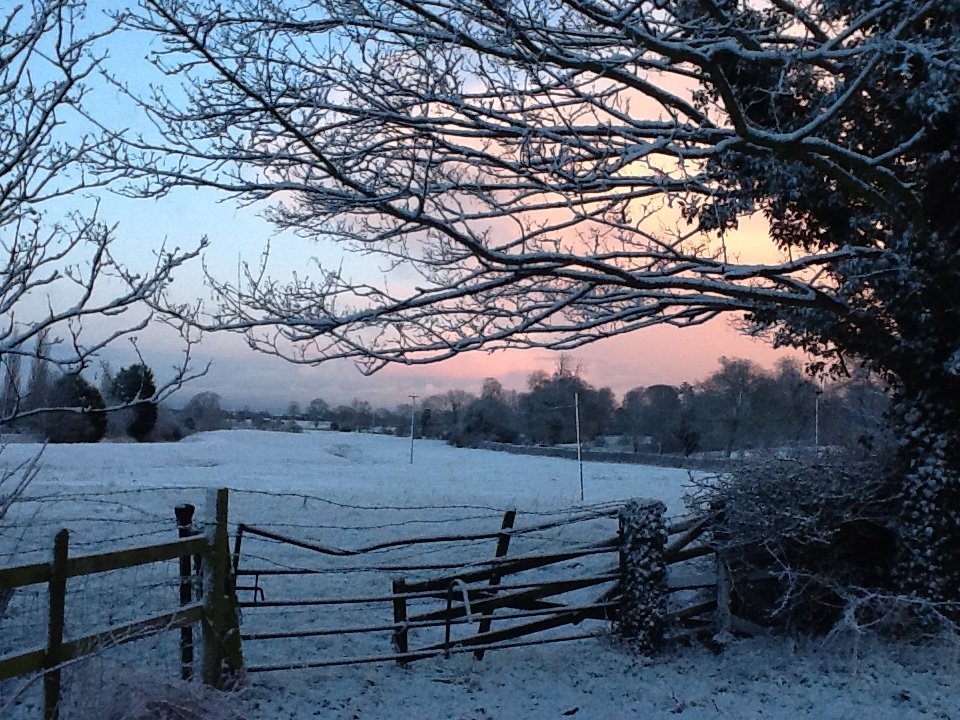
It’s been ours for 4 years. I love it. It’s rough, it’s beautiful and it’s home to a dozen cows and a couple of horses. At least for the most part of the year. Soon, God willing, a small corner of it will shelter a bunch of apple trees and Ticklepenny Orchard will be born. It’s for me, my family and a man who gave his life for his country without having a nose or a sweetheart.


 The Appeal of Mrs Toogood
Leave a reply to Bethan Penny Cancel reply