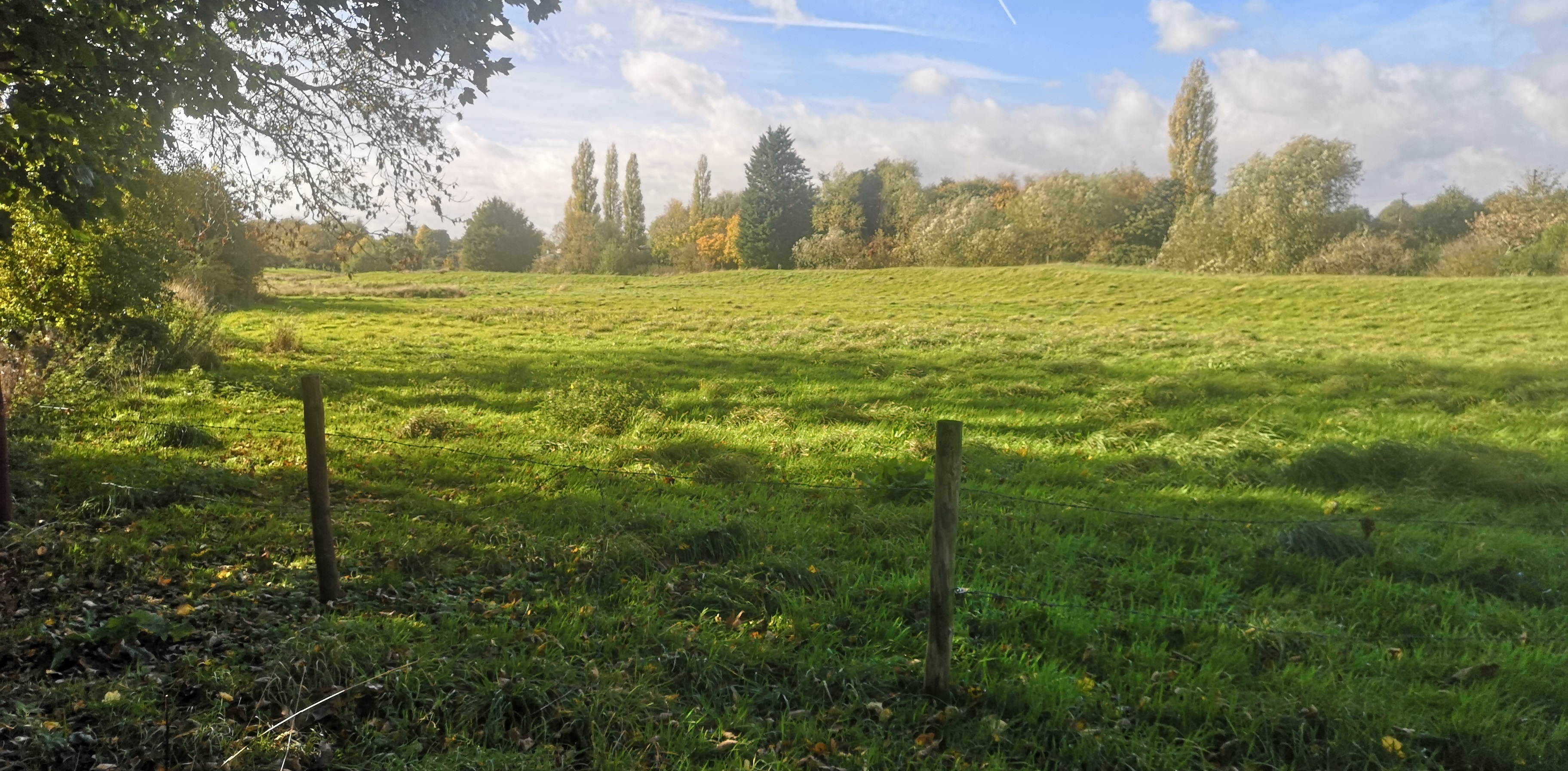
It seems unlikely now as I look out the window but there were days earlier last year when going outside didn’t seem quite so hazardous. A flask of coffee, a lump of cake and I could be away, off across the fields with almost no chance of either drowning in a flash flood or being caught in an impromptu blizzard. This particular trip followed an evening drinking IPA and picking at Sunday lunch leftovers in a friend’s kitchen. I can’t remember quite how they came up in conversation but come up they did: the Saturday Pits.
Way back in the early seventeenth century, the story goes, Louth was beset by a series of poor harvests and then, when it was already on its knees, an outbreak of plague. It wasn’t the first episode, so a lockdown was put in place and the symptomatic were confined to quarters until they were either dead or healed. Soon, the common people’s only source of food and medicine was local toff Sir Charles Bolle who was prepared to ride round town like a Ye Olden Dayes version of Deliveroo, safe in the knowledge that he had already survived two previous doses of plague. Tragically, he rode round with servants who were less immune and more prone to dropping dead but still, his heart was in the right place. The outbreak burned itself out by November 1630, but a decision was made to keep the town quarantined until the following Spring for fear of it all kicking off again.
The town relied heavily on neighbouring villages for their victuals, but the farmers were understandably nervous about coming to market. Eventually, faced with growing starvation, some bright spark came up with the idea of using a suitable venue outside of town to arrange regular markets. They needed a location that would divide customers from sellers but had a place in the middle where food and money could be left. Somebody remembered seeing a depression in some trees outside town and thus was born the Saturday Pits, so named because it was a pit used on Saturday. It’s all starting to make sense now.
Despite almost hours spent poring over the contents of Louth Library’s local history section, I could find very little else to go on but as I sat chewing my biro and pretending not to read what the person sat next to me was writing, an image popped into my mind. Where there were people selling apples and pears, surely there would be a decent chance of an occasional fruit rolling into the undergrowth and surreptitiously germinating. What better centrepiece for my new heritage orchard than an apple retrieved from history? I needed to get out there fast before the land was grabbed by developers and turned into a scenic housing estate. Fortunately, the location of the pits is no secret. Grab an OS map (of Louth, ideally) and there they are, just to the east of town, nestled in a copse where Kenwick Road meets the bypass.
As soon as there was a sniff of decent weather, I knocked up some sarnies and set off. I’m not pretending it was an epic hike, but there was always the chance of me clumsily twisting an ankle and having to sit in the trees until someone noticed my absence and launched a search party. Which would have been Christmas at the earliest, I suspect. As I walked, I tried to imagine feeling half-starved and fearful of plague, but my immersion was slightly hampered by the pork pie in my hand. I wondered what the locals of the day would have brought along for lunch. Haslet probably. To be honest, some of the haslet you get today tastes like it was made four hundred years ago.
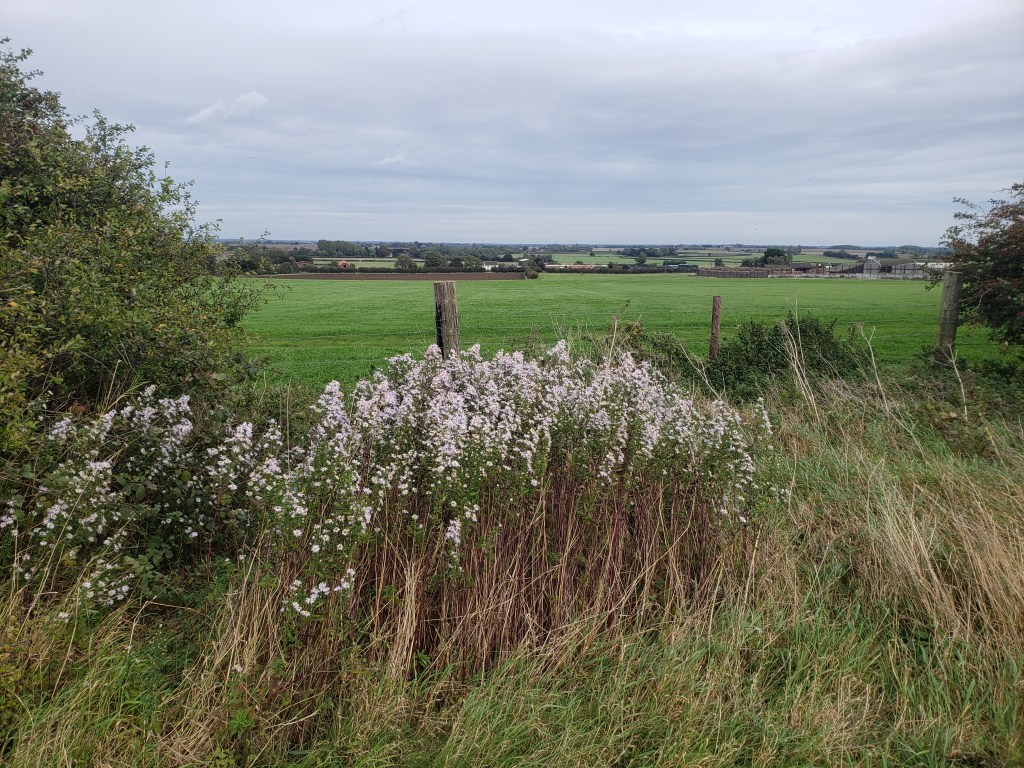
The houses got larger as I walked down Kenwick Road until I emerged from the town proper and found myself surrounded by rolling hills and arable fields. Wind blowing through the cracked pipes of a rusty iron gate filled the air with a mournful dirge as I looked around for the spire of St James. There was no sign of it which made the spot unique for miles around. On the way home afterwards I discovered that it had been behind me, in plain sight. I sometimes wonder whether nature is trying to teach me something.
The most direct path to the Pits was through the garden of an empty house but it still felt wrong to trespass somehow. Instead, I continued to the bypass, turned right and slowly climbed Kenwick Hill. There was no footpath so I divided my time between sheltering in the roadside trees like some kind of escaped convict and running as fast as I can when there was a break in the traffic. As I watched, a tractor laden with hay bales struggled past. Behind it was a column of cars, too nervous to dive past as they approached the brow of the hill and presumably realising that Lincolnshire by-passes aren’t the Get Out of Traffic Free card they might be in other parts of the country. Chances are they were on their way to Grimsby anyway so give it an hour and they’d all be wishing they were still trapped behind the hay.

After about half an hour leaping in and out of the hedgerows, all that stood between me and the pit was two sides of a stubble field and a legally-dubious short walk. No-one seemed to be around, so I swallowed the last of my coffee and girded my loins for some low-level criminality. I hadn’t wanted to trespass on a domestic garden but surely there’s a different moral standard for fields? The going was uneven but easy enough and the only moment of anxiety was a break in the hedgerow that exposed me to the windows of a farmhouse far in the distance. I decided the chance of lookouts was slim and carried on. Eventually, I dragged myself over a broken fence, through some undergrowth and there before me were the Saturday Pits in all their glory. Well, the Saturday Pit at least. Maybe there’s another one nearby.
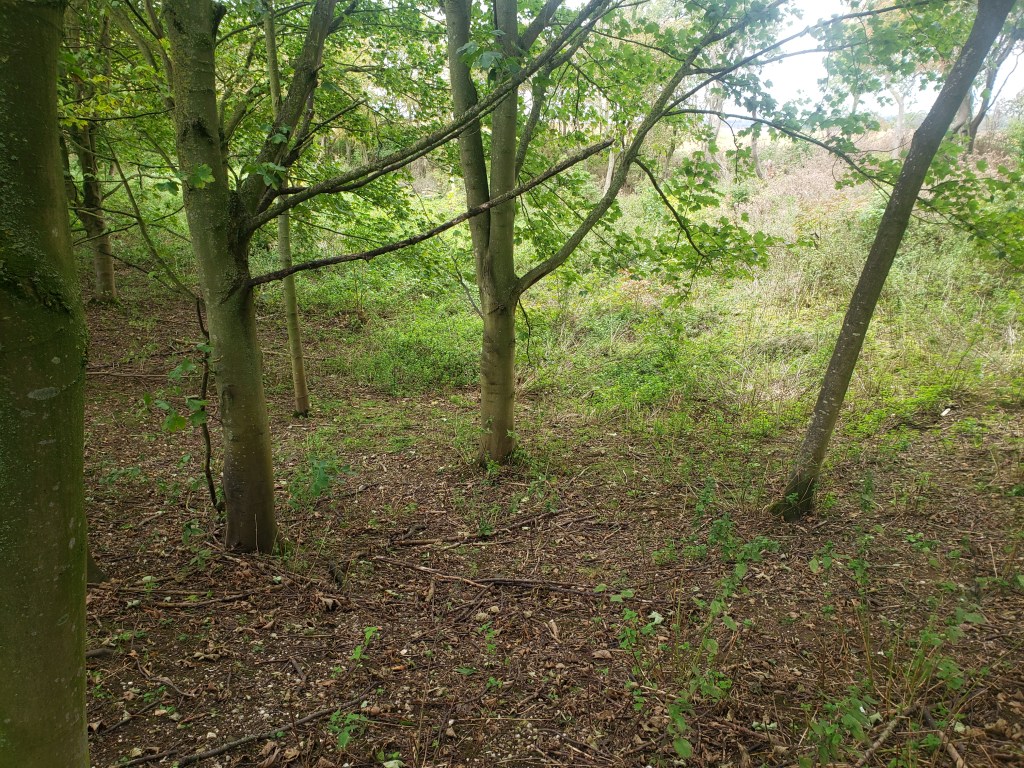
In truth, and unsurprisingly for this blog, there was not an awful lot to see and certainly no sign of apples. The pits are basically just a large dip in the ground about forty feet long with steep slopes on either side. There’s definite history in the air though. I can imagine the raucous scenes of Saturdays long past, when desperate tradesmen met even more desperate townsfolk to haggle for their lives and exchange their wares. Did they ask after loved ones as they bellowed their terms? Did people leave with pockets full of coin but hearts downcast at news of their townie relatives? Apparently, once the shouting reached an agreeable conclusion, the sellers would scramble down and leave their goods at the bottom of the pit. The buyers would then exchange their loot for coin and make their way back home, sacks bulging with fresh turnips and beetroot. The coins left behind were vigorously exorcised and doused in vinegar before the farmers dared collect them. I bet a Metal Detectorist would have a field day. There must be lost coins everywhere. I scraped about a bit with my foot but found nothing.
Before leaving, I took a few minutes to perch on a fallen tree trunk and ponder how history repeats itself. In a few hundred years from now, maybe people on hoverboards will float out to long abandoned rural outposts like Louth and recount tales of the great Covid epidemic of 2020. I wonder if my blog will have reached a hundred views by then. Probably not.


Leave a Reply