Writer’s note: this post is a summary of all the nonsense that has gone before. Don’t waste precious time reading it if you’ve been around for a while.
Some years ago, my dad took early retirement from the offices of the local district council with a decent lump sum and, I think it’s fair to say, a sigh of relief. Buoyed by new found freedom, him and his better half Barbara invested a chunk of their money in eleven acres of lumpy meadowland just outside Louth. There was a bit of legal toing and froing before contracts were exchanged but eventually the field was theirs and, by virtue of their reckless decision to share it with their kids, partly mine too.
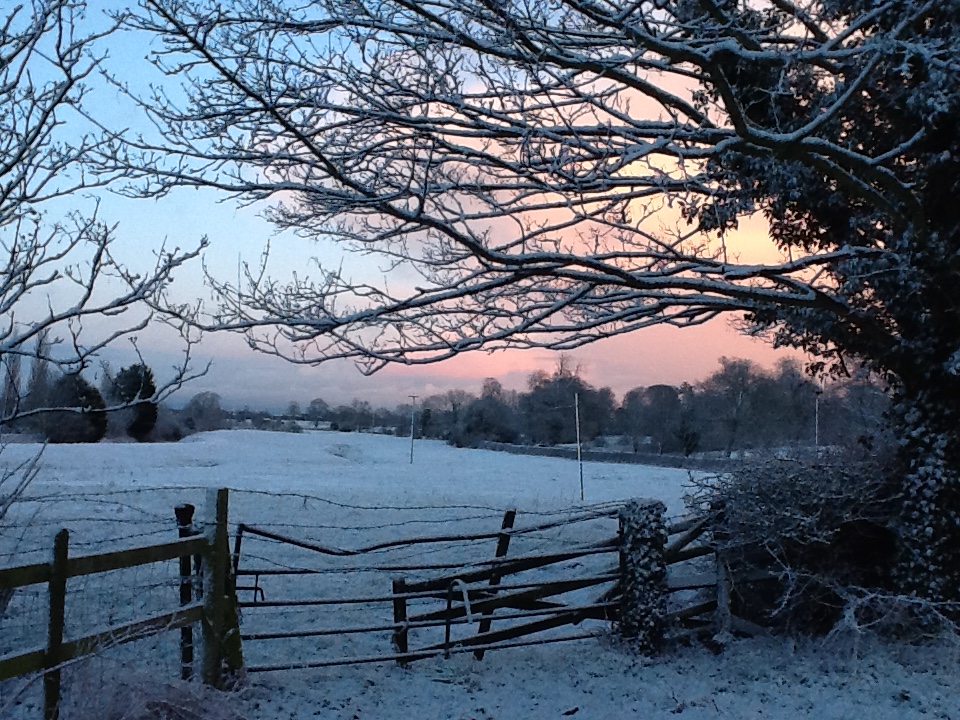
I still have the first photo he sent after contracts were exchanged, often deployed as desktop wallpaper on my computer. The gate is in the foreground, top bar bent and hanging unevenly from fence posts. Past the gate and barbed wire fence, the field stretches enticingly into the distance, bumpy and covered with snow. You can just about make out the River Lud, snaking its way towards the ruins of Louth Abbey. It’s a beautiful photo that still gives me shivers and makes me wish we’d taken a similar photo on the same day every year since. You can tell I’m getting old.
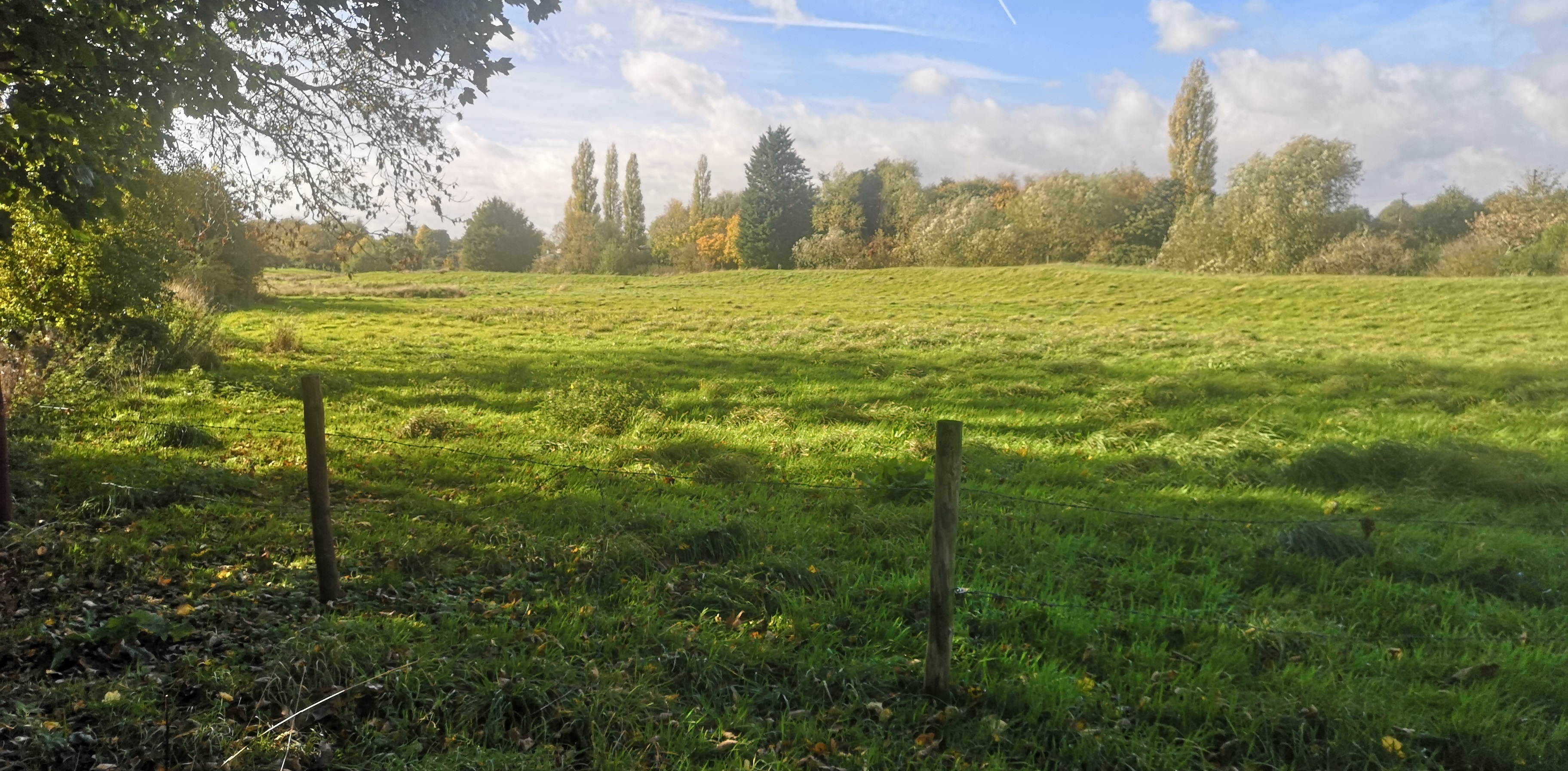
Standing with your back to the gate, the field is bordered by country lanes to the right and at the far end. Behind you an impenetrable hedge runs down to the corner where you meet the Louth Navigation Canal which forms the final boundary. The River Lud, from which Louth gets its name, trickles diagonally across the centre of the field, although it’s barely more than a rivulet at this point. I once saw an Eel in the deepest part of the river, but that was the only time I’ve seen life in its water. In the furthest corner is Ticklepenny Lock and the nearby site of a long since demolished lock-keeper’s cottage. I often think it would be nice to rebuild but we’re in a conservation zone so it’s an unlikely prospect.
I was living in Manchester at the time of the purchase and briefly hoped to moor a narrowboat on the canal, but unfortunately it’s about six foot shy of being navigable. With my dream of becoming the next Timothy West, albeit one sadly lacking Prunella Scales, thwarted I turned to my backup plan. I started planning a heritage orchard, full of Lincolnshire apples that I intended to find and rescue from the most distant reaches of the county once I’d finished moving back to the land of the yellow bellies (Lincolnshire). I won’t go into much detail here as to how that idea came about because I’ve gone over it in unnecessary detail in other parts of this blog, but it involves a late night trip to a supermarket in Manchester, some fallacious assumptions about the absence of Cox’s Orange Pippins and a list of lost Lincolnshire apple varieties that I found on the website of the East of England Apples and Orchards Project. “Some of these varieties,” alleged the text, “may still be found in the wild.”
Suddenly, in my mind’s eye I became an intrepid explorer, wellying my way through fields and hedgerows, heading for the last known sighting of Mrs Toogood (A medium sized flat apple ribbed around the eye. Yellow skinned with red flush and stripes. Last recorded in 1946.) or The March Queen (A small, acidic, flat green apple with some russet). Before I could crack on with rescuing lost trees though, I decided I needed a dozen or so others; varieties that are still Lincolnshire-born but are still available to buy. A mysterious nurseryman from Manby called Mr D’Arcy sold me six old Lincolnshire apple trees, warned me that the reason all the other local varieties were long lost was because they weren’t any good in the first place, and waved me on my way. I took no notice of his warnings and instead roped in my dad and younger brother to help plant them in our rural steadfast. Ticklepenny Orchard was up and running.
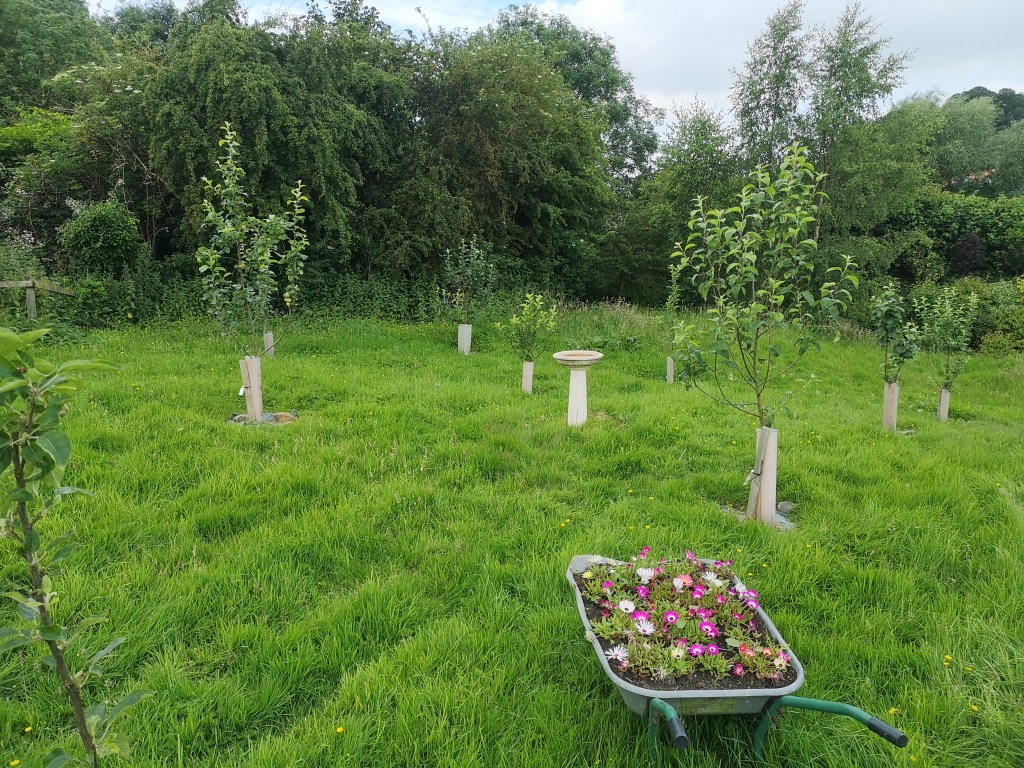
Although more conscientious (and, in my defence, local) members of the clan did most of the watering and maintenance, I pitched up now and then to bung in more trees and pretend to do a bit of weeding. The field is now home to eighteen trees in various states of disrepair divided between two sites separated by a five minute walk. Unless you walk like my dad, Old Pat Bombadil, in which case it’s about two minutes.
In the process of establishing the orchard, I’ve been around the county looking for lost varieties of apple growing wild and blogged about my ongoing lack of success. I’ve also been to apple days near and far (but still in Lincolnshire, obviously), stalked the descendent of the original Bramley grower and mourned attacks on my trees by rabbits and insects. It’s been quite the ride. There’s about sixty thousand words lurking nearby of varying artistic merit but all free at the point of access. If you’re planning a lengthy toilet trip and have nothing better to divert you, feel free to give it a skim. Or just read this bit and thank your lucky stars you weren’t caught first time round.
Now to the point of this post. For the last few years, I’ve repeatedly attempted to revive the blog around January time when there’s nothing to write about but New Year’s Resolutions are still fresh in my mind. Thus far, my commitment has always faltered within a few weeks, despite the undeserved encouragement of friends and family, but this year is going to be different. This time the plan is to document a whole twelve months of orchard news, hopefully including the making and consumption of cider, the planting of new trees and the tender loving care of old ones, without feeling too constrained by timetables or the stress of asking people on social media to read it. The posts might not be quite weekly but there will be several of them. I almost definitely promise.


Leave a Reply