
Last year’s harvest felt at the time like a bumper crop. Spindly branches heaved with fruit, bending low to the ground and offering easy pickings to the local wildlife. I’m all for sharing the wealth but the critters would never finish one apple before moving on to the next. Frustrated, I enlisted family and friends and spent two sunny afternoons loading bucket after bucket with lush appley goodness. It didn’t take a genius to realise my “apple a day” habit wasn’t going to make much of an impression on the haul, which was fortunate because there weren’t any geniuses about. Well, that’s not strictly true. I roped in my over-achieving niece to help but she got bored after about ten minutes and went inside to watch viral videos on TikTok.
Blessed with more apples than I knew what to do with, I decided to revisit my short-lived obsession with heritage cider. To me, it had always seemed like the most mystical and wonderful of the boozes. Whereas hops will do nothing but deteriorate if left alone, apples will naturally start fermenting and end up providing wandering squirrels with a ready source of hangovers. In fact, I found an old book that claimed you don’t really “make” cider because the naturally-occurring yeast does all the work. Be that as it may, I ended up putting in quite a lot of effort so I want some of the credit.
Unfortunately, Lincolnshire has never been much of a cider-producing county unlike, for example, Somerset or Kent. I think it’s something to do with our soil and acidity, but the technical articles I found just left me scratching my head. We still boast a couple of reputable cider makers but the one in Grantham doesn’t use Lincolnshire apples and the other one is in Nottinghamshire. It’s far from a propitious start for my project.
If my overloaded apple buckets were to become proper Linkisheer cider there was going to be a lot of hard graft. Not being much of a fan thereof, I roped in an accomplice, bamboozled him with talk of free booze every summer and sealed the deal with a Wetherspoons breakfast. Stephen seemed to me a practical sort of chap, not to mention someone who had repeatedly hinted at a fondness for the odd drink, so I was well pleased when he signed up. As it turned out, he seemed to enjoy the laborious process of pulping and then pressing apples far too much. To be honest, the happy look on his bearded chops slightly annoyed me because I’d spent good money on my Wetherspoon’s bribe.
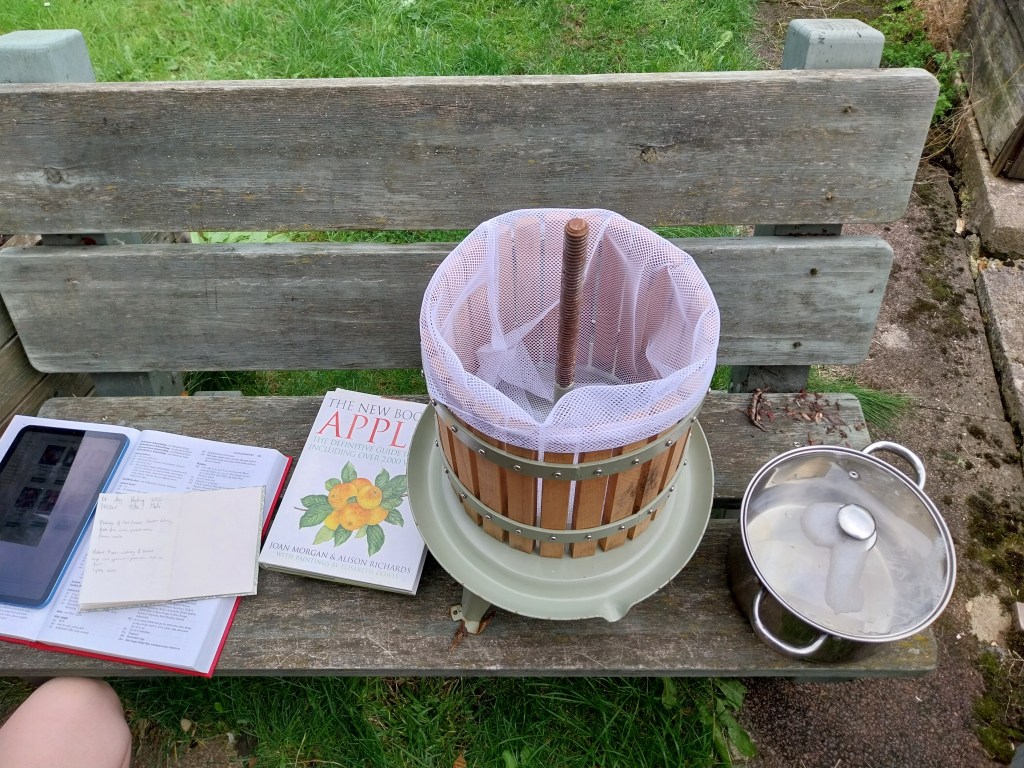
Despite talking the talk, Stephen turned out to be no more a cider-making expert than me. Luckily what we both lacked in expertise and experience, we made up for in enthusiasm and impressive looking gear I’d found online. Some bits of the kit, particularly the wooden slats, hadn’t enjoyed being stuck in my leaky shed for the last few winters but I managed to spruce them up with a bit of elbow grease.
Once we’d screwed the press to a wooden table for more leverage, we managed to eke out about two litres of deep red juice from a single bucketful of apples. Industrial presses and more muscular arms could have extracted twice that in all likelihood but we boasted only the horsepower of two middle-aged weaklings. Words were exchanged over whether or not it was acceptable to throw in apples that had bruises and signs of insect attention, but we eventually reached a compromise without coming to blows. By the time we’d finished, we had about ten bottles of single variety juice and another ten of a mix that we could use for cider. I won’t lie; we drank more than our fair share on the day but managed to save a few bottles for friends and family. The fresh juice was powerful stuff; sweet but wholesome and refreshing. It almost seemed foolish to risk it on cider.
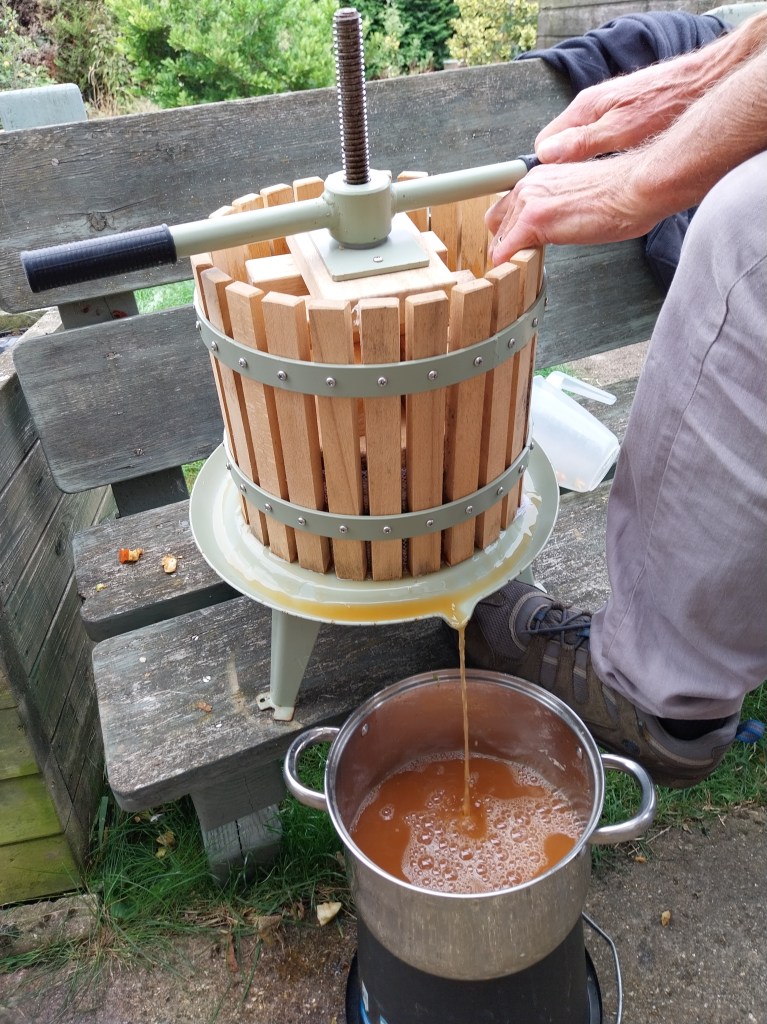
I’ll confess my resolution wavered slightly, but we stuck to the plan and filled two five litre demijohns with pure juice, gave it twenty four hours for the bacteria-murdering Campden tablets to work and then slung in some champagne yeast. Three months have passed since those heady days in Autumn and now my the cider has finished fermenting. Deep layers of sediment have collected at the bottom of my two demi-johns and the liquid has clarified dramatically. Gone is the deep autumnal red to be replaced by a translucent golden hue. The time has come to siphon it into bottles.
Stephen and I start the day with an early doors visit to Wetherspoons for old times’ sake and then wander back to my ex-council house to get started. To be honest the liquid looks a lot like shop-bought cider at this point but I’m hoping the eventual taste is worth all this effort. Commercial ciders only need to contain 35% actual apples but my stuff will be 100% pure. Surely that’s got to count for something?
The trick is to get the cider out of the jar and into sterile 500ml bottles bought for the occasion without disturbing the sediment. A little sediment might make the finished product look authentic but too much and it will taste more like vinegar than apple nectar, not to mention the risk of it smelling rough. To avoid contamination, we’ll be using a two foot long clear plastic tube with a bucket shaped inlet on one end and a tap on the other.
Stephen volunteers to start the siphoning whilst I use my notoriously unsteady grip to hold the bucket just above the sedimentary layer. He fixes his mouth around the end of the tap and starts sucking. It’s not an attractive sight and I grow increasingly apprehensive as the liquid flows down the tube towards his waiting gob. I’m sure I’ve read somewhere that cider may be quaffable by Easter but it’s nowhere near drinkable until Summer but he is either unaware or willing to take the risk.
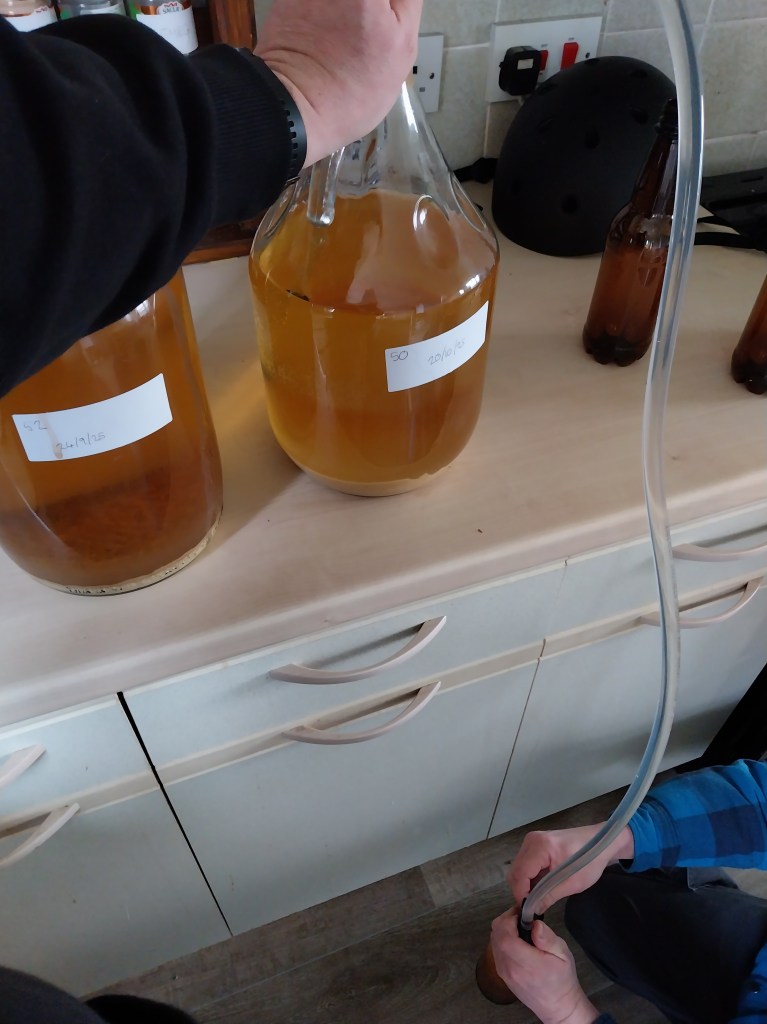
As it happens, he says it doesn’t taste too bad and then puts the tube into the first bottle. I’m inclined to believe him because it looked to me like there was more liquid consumed than was strictly necessary. Nevertheless, with a full siphoning tube and a tap at one end draining freely, we crack on with filling bottles. The design of the tube means it’s impossible to fully empty the demijohn without letting a little sediment into the last bottle. Instead, we plump for quality over quantity and leave the excess liquid behind. It’s a shame, but I comfort myself with plans to use the leftovers when I go wassailing at the weekend. More on that later.
All told, we end up with fifteen full bottles of cider which we leave to mature in a cupboard under the stairs. There’s half a cup left over which I force myself to try. It’s actually not bad. Not strong, but sharp and tasty. Hopefully, by the time it’s ready the taste will be more intense and powerful but it’s not bad for a first effort.
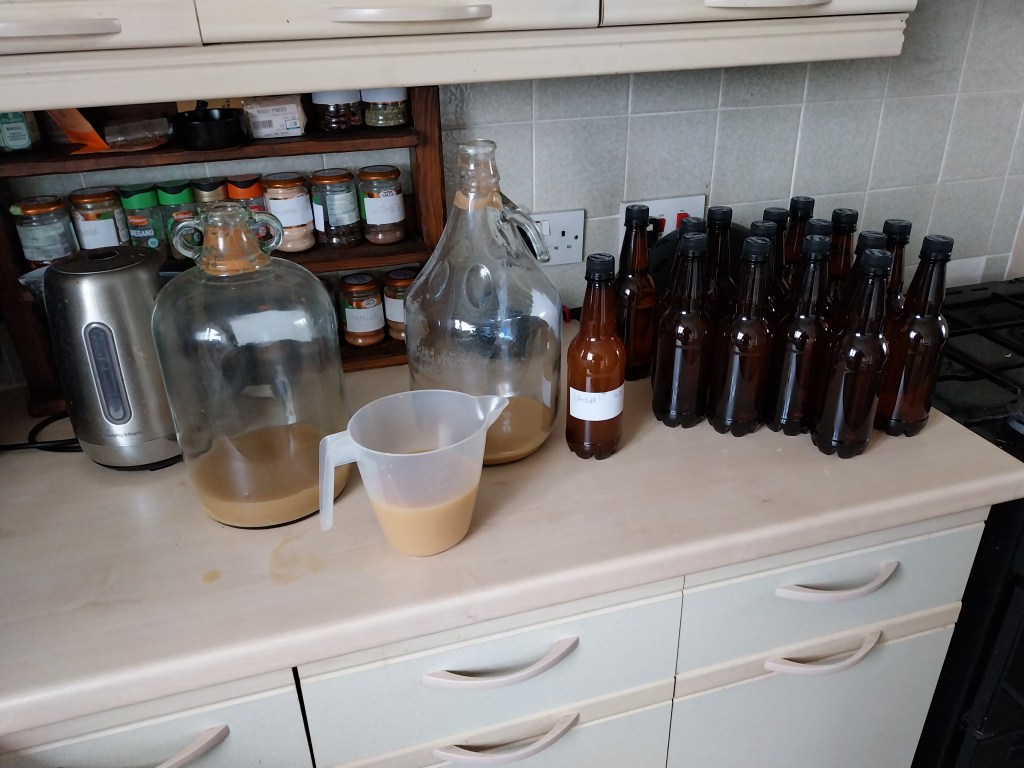
Despite all the doubters and critics, the Ticklepenny Tap is go. Roll on summer.


 The Appeal of Mrs Toogood
Leave a reply to simonhawking Cancel reply