Wednesday, 20th May was World Bee Day, a time for everyone to come together to sing songs, wave flags and celebrate the stripy guarantors of all life on Earth. Well, maybe not the first two things. I only knew about the festival because I saw a sign in the local library when I got caught short in town recently. I made a mental note to attend as I raced up the stairs to the public toilet. There were to be talks, the sign said, and demonstrations of how bees went about their business.
This all came at a very handy time for me because I had been considering some kind of bee installation at the orchard for a good while. World Bee Day, and its attendant experts, might be the perfect time to get some pointers. I suggested to my some time orchard conspirator, Stephen, that we could make a day of it by meeting at the pub, heading to the library and then finishing up by checking on the five trees we attempted to graft a month and a half ago. He had nothing better to do so agreed to tag along. It was all systems go for a day that promised to be full of joy (full English breakfast), learning (bees) and crushing disappointment (grafts).
The day began around table fourteen in the Joseph Morton. I won’t go into detail about this bit because everyone knows what a Wetherspoons breakfast involves; pretending to consider the regular meal or even the pancakes before shelling out for the humongous sweaty jumbo breakfast and then shovelling it in at a thousand miles an hour before the unheated plates suck the last lingering warmth from your food. I’d do it every day if I could.
Before we know it, breakfast is over and the two of us head down Pawnshop Passage towards the library, contemplating the damage we’ve done to our coronary arteries. The bee display is situated directly opposite the entrance and is manned by a friendly looking lady surrounded by bits of paper and jars of honey. Insofar as there is a prime location in the library, this is it. There’s no way of getting to the public computers or 25p book sale without first going past her desk.
I realise fairly early on that her stand is aimed more at families than apple nerds but she gives us plenty of time to waffle on despite that. Every time the door opens, her eyes flick upwards to scan for more customers but she never tries to rush us or our ignorant questions.
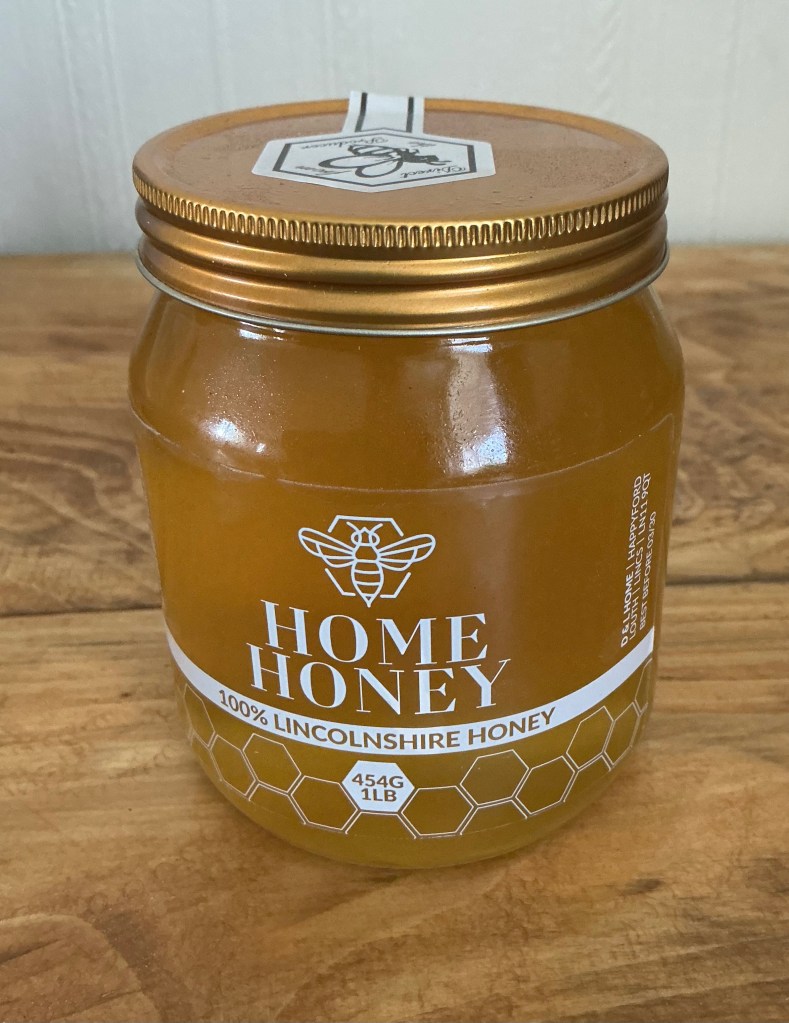
During the chat, we are plied with samples of several different types of honey, all available for the low, low price of six quid a jar. She barely breaks even, she claims, decrying mass-produced supermarket honey in favour of small, local producers. She’s preaching to the choir on that point. A more cynical man than me might suggest that shifting product was definitely in the back of her mind when she signed up for the Bee Day gig but I don’t really blame her.
I kick off the interrogation with an, as it turns out, poorly considered question about the possibility of hosting a hive at my orchard without it taking over my life. She laughs as if the thought of someone having bees without being forced to spend every waking moment looking after them is the very definition of madness. Panicking, I ask if there are hives that just let the bees crack on with stuff on their own because I’m not particularly bothered about taking their honey. Now she is looking at me as if I am speaking Russian, a language I am still yet to master despite being nearly four days in to my Duolingo course.
I can sense I’m losing her. She has obviously deduced that I am a slack-jawed yokel with no idea of life in the bee trenches. She brings our time together to a close by alluding to an established apiarist who maintains hives in Keddington village. Those bees, she reasons, will be the ones pollinating my field. There is no need, her unspoken assertion goes, for an idiot like me to get involved. Know your place, you baldy oaf.
So, I’ve had my turn. Stephen steps up to the plate with a seemingly innocent question about the economics of bee-keeping. There’s a weary shake of her head as she tells us that five years in she is yet to make a profit. I’ll confess to a certain surprise at that because she’s already managed to sell a jar to me despite the fact that I’ve just bought a load from elsewhere and didn’t have any money on me. I’m still trying to work out how she did it. I remember asking if it keeps and being told it will last forever so there’s no reason not to stockpile. I’m too scared to point out the prominent Best Before date on the label.
Everything seems peachy at this point. If she’s annoyed at two families walking past whilst we are wasting her time with us, she has the good grace not to show it. Little did I know that the cliff edge is just around the corner and having into view.
Stephen asks, without any obvious (at least to me) attempt to wind her up, how much honey each hive produces on average.
“There’s no way of telling,” she says, and I shrug and get ready to say goodbye.
Stephen though, perhaps frustrated by me scrounging all his loose change to hand over for something he knows I neither need nor want, is having none of it. His rebuttal is polite but firm.
“There definitely is,” he says, smiling politely as if he’s just joking. “If you’ve been going for five years, just divide how much you’ve produced by five and you’ll have an average.”
The temperature in the room plummets. My Raynaud’s Syndrome starts to kick in despite the beaming sunshine outside. There is clearly no way on God’s Green Earth that the bee expert is ceding this or any other point to someone who is clearly an ill-informed amateur. The hits come one after another, each more devastating than the last; the weather, the available flowers, even the mood of the bees. No, she doesn’t keep track of how much she sells. No, she doesn’t count how many jars she buys from the supplier, despite earlier complaining about the cost of them.
I dive between the two of them before shots are fired and we’re on the cover of the Louth Leader. Grabbing a random picture from her desk, I ask her what’s going on here. Thankfully she buys it and turns back to me, saying something about how her hives are organised to prevent the Queen just buggering off on a whim. The almost nearly cheerful mood is restored, honey has been bought and no blows have been thrown. I’m not taking any more chances. With a swift thanks and goodbye, we head for the exit, leaving Bee Lady to lure in an unsuspecting young mum who has turned up for story hour and didn’t realise that she needed thirty quids’ worth of organic honey. I pretend not to notice that Stephen is still muttering under his breath about maths and averages.
“I think I’ll put a beehive on the back burner for now” I say, picking at some bean juice I’d dribbled onto my shirt during breakfast.
“That’s probably for the best,” he agrees.
And that’s it. Bee day is behind us. It’s time to move on, time to get going. No more bees for me and Steve. The rest of the day is about the apple tree scions we painstakingly and, in my case, painfully grafted to rootstocks last month.
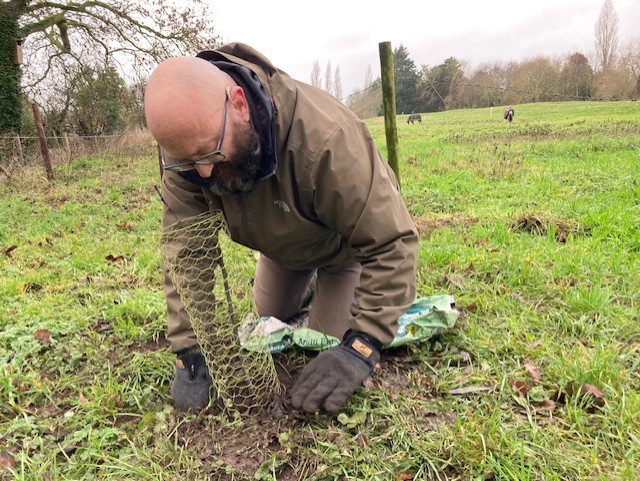
Starting with the sample from Stewton Village, I attempt to cut through the tightly wound blue freezer bag that’s been holding scion and rootstock together but discover that the knife I’ve brought might well be sharp enough to scrape plastic from model kit mould lines but is nowhere near sharp enough for this job. I run the blade down the pad of my thumb to confirm that it’s as blunt as I think it is and discover that, if anything, it’s even more useless.
My crap knife leaves us with no option but to untie the knots with our fingers, a maddeningly frustrating task. There’s a lot more pulling and stretching of the plastic than would be ideal but it works eventually. Of the five trees we unwrap, three of them immediately fall apart. Two of them, both ones that I had nothing to do with, seem a little firmer. As advised online, I loosen the plastic but leave it to unwind naturally. Next week, I’ll head back and remove it properly.
Stephen, more curious and conscientious than me, has been watching grafting videos and is now apparently an expert. He tells me that the graft should only be considered a success if there is visible new growth, By this measure, even the two that are still standing are also failures. I’m not willing to give up on them yet though. Another week won’t hurt and maybe something miraculous might happen.
That’s what I say out loud. My inner voice is more realistic and is already making plans for next year. Thirty root stock grafted onto five scions from six of my favourite trees and then kept indoors in plant pots where they’ll have the best chance of survival. Next time, I’m leaving nothing to chance. Having said that, it’s ignorance rather than chance that has been my downfall this year, but the point remains.
Despite knowing full well that I’d done everything wrong, I’m still a bit gutted that my first grafts have been such a dismal failure but I’ll carry on regardless. Next year will be better. It’s just a bit of a shame there’ll be no Ticklepenny bees around to see it happen.

 The Appeal of Mrs Toogood
Leave a comment