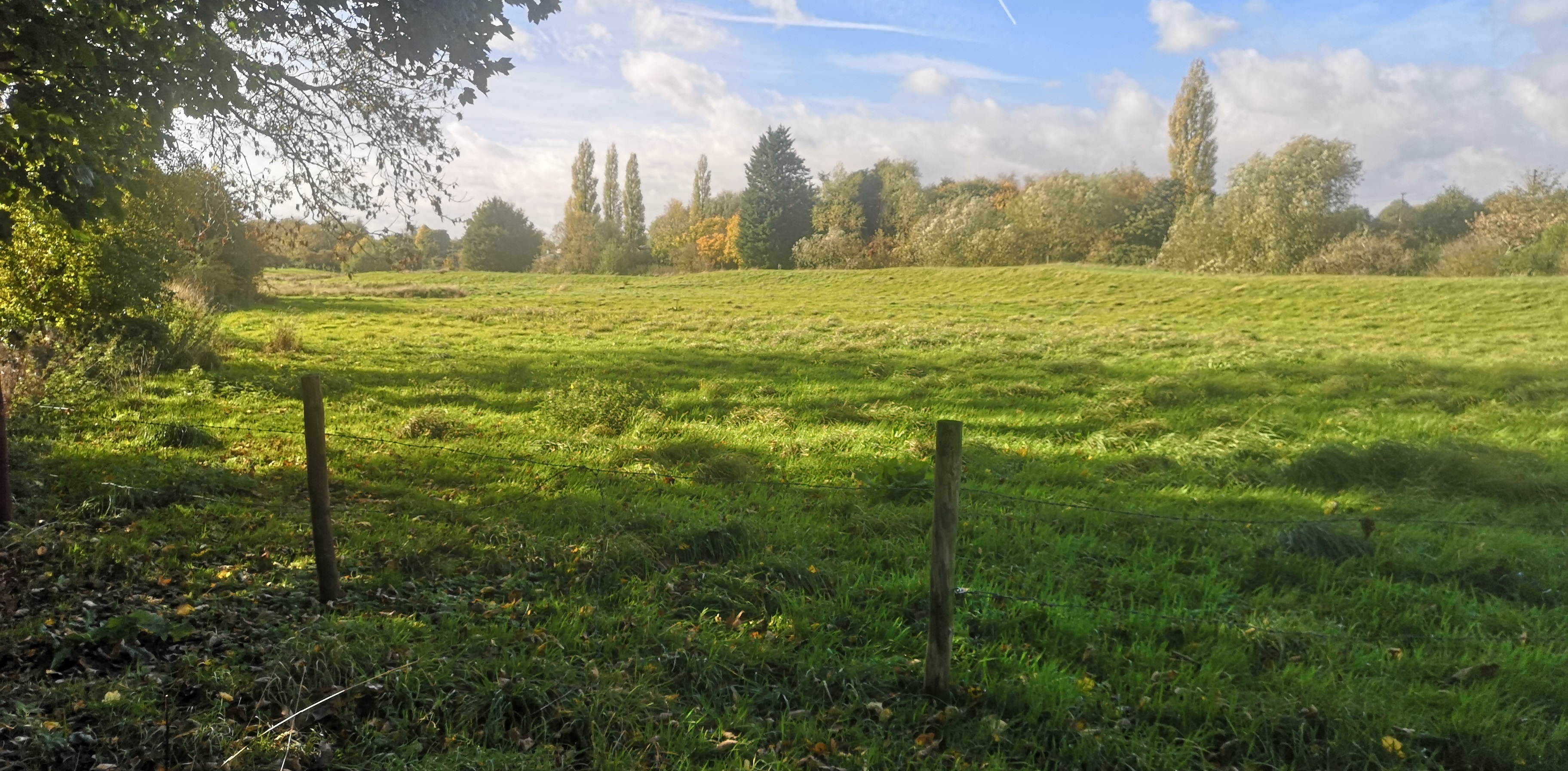
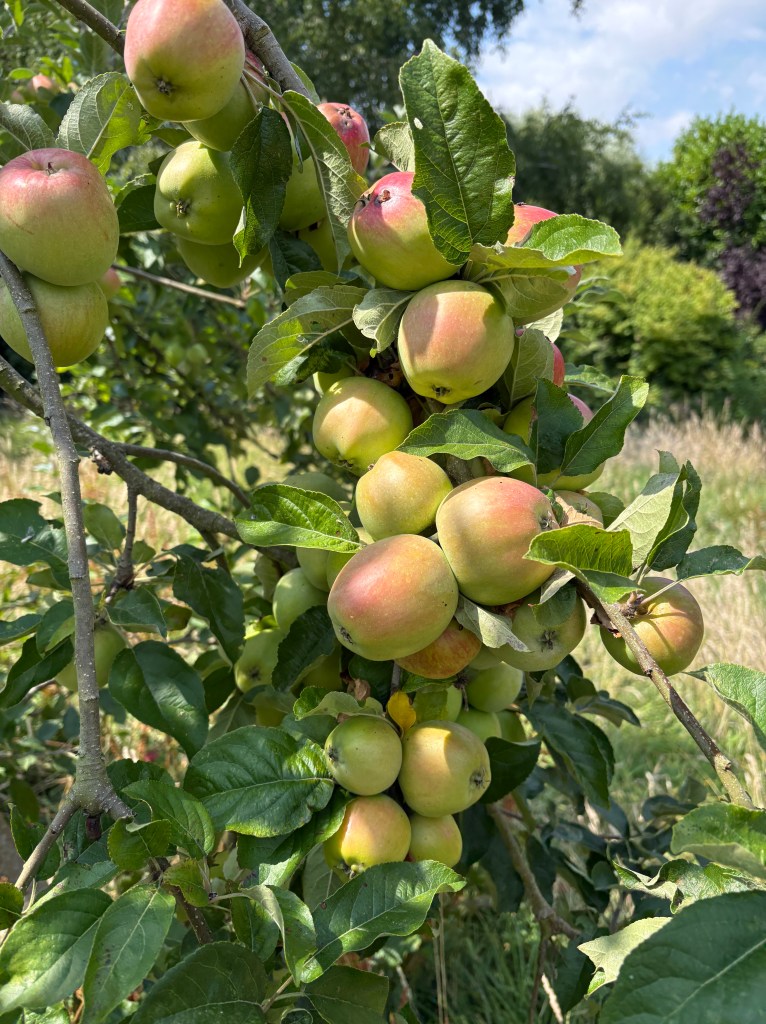
The official Royal Horticultural Society advice is to do your fruit thinning before mid-July but I’ve never been one to follow advice. Instead of listening to the experts, I spend the first half of July sat at home watching the World Cup at ungodly hours of the morning and neglect the straining branches of my juvenile apple trees. Then, on an unrelated visit, I notice the scrawny trees laden with more fruit than they can carry, branches curving over and to the ground, and start to regret my idleness. I check the RHS again and rope in my friend Stephen for a late session of apple thinning. There’s no need to wait for a sunny day because every day these days is the same; blisteringly hot and no chance of rain.
We arrange to meet at the field but I get there a few minutes early to make sure I’ve got everything we might need. I briefly considered bringing a couple of bottles of cider along but it’s still a bit too early in the morning. Old school types might scoff but I’m still not quite up for early doors drinking. Maybe next year when my Ticklepenny Cider will hopefully be a bit nicer.
Barb is already at the field, wandering blissfully around with her horses, barrowing steaming loads of horse crap to the poo bank. Once full it will be driven off to the allotments of Louth and eventually turned into organic vegetables. It’s a funny old world where the things that are supposed to be at the top of the food chain depend on the turds of their underlings for sustenance.
I’ve been trying to figure out whether the apples might already be fit for purpose so Barb shows me how to use her Portable Refractometer. It’s a handy dandy little device that tells you the sugar content of whatever liquid you drop onto the lens and will help me to make a plan. She’s also got a garlic crusher to squeeze juice out of a lump of fruit and a plastic pipette that she regularly sterilises in a bucket of dodgy looking river water. She’s thought of everything.
Stephen pitches up roughly on time wearing the train driver’s cap that he thinks stops anyone noticing that he hasn’t combed his hair since 1974. We have a brief chat and agree that it feels weird to voluntarily throw away apples. It might feel wrong to amateurs like us but every reliable source says that if you thin your crop, you get bigger and better fruit. If I can’t quite get my head around the less is more ethos, what does make sense to me is reducing the strain on the tree branches. If going without a full crop means my trees will be healthier in the long term, that’s a price I’m very willing to pay. Let’s be honest, I waste most of the apples anyway.
There’s no point faffing around so we divide the trees between us, grab a carrier bag for each one and crack on. I’m pretty certain the RHS recommend one fruit per 8cm of branch so I pass this on and we have at it. There’s a nagging feeling in the back of my mind that I’m forgetting something but I want to appear confident and knowledgeable even though I’m neither of those things. Later on it turns out that the actual RHS advice is two apples per 8cm but I’ll never admit getting it wrong to Stephen.
It’s not exactly hard work but the heat doesn’t help. About four trees in, we decide to take a break for some liquid refreshment. Although Barb has left for home, she’s equipped the stables with all mod cons including a portable hob and kettle. As we drink, I show Stephen how to use the Refractometer. The apples we’ve taken so far are running at about 8% sugar content. Last year’s ripened specimens had about 14%, which I think is about average for eating apples. I take a bite just to taste what 8% is like. It’s tart but not unpleasant. Stephen disagrees. His face contorts like a child given double broccoli.
Soon we’re back at it. Choosing which apples to remove from each cluster is proving to be a bit of a hit and miss affair. I try to target ones with blemishes or bird-inflicted puncture wounds but as soon as I lay my hand on one and twist a little, the others immediately throw themselves to the ground in solidarity with their oppressed comrade. Did I mention that I’ve broken my strimmer and sent it off to be replaced under guarantee? Well, in its absence Barb has cut down the most egregious weeds but there are still enough nettles to make rooting about for fallen fruit hazardous. There was a time when I would have laughed at the minor inconvenience of a few stings but that time has long since passed. These days, even the thought of a decent nettling is enough to make me bolt for the nearest sofa.
Stephen needs encouragement to remove more than one or two apples from each branch but I’m managing to be quite ruthless. I think the guilt I feel for neglecting them is starting to motivate me. It’s honestly about time. I can’t spot my Wassail Robin in the trees nearby but, if he is watching, I imagine he must be relieved. I wonder whether he’ll eat the 8% apples if I leave some behind. Probably not. There are enough plump blackberries growing in the hedgerows to keep him in fruit until midwinter.
Tree after tree feels the hand of our cull. I take photos of the most curved branches and pledge to prune and thin properly next year so it doesn’t happen again. It takes us about an hour and a half before we’re finished but there are a lot of drinks breaks and periods of standing around doing nothing. It’s the views; what sort of monsters would we be if we didn’t get distracted by rolling meadowland and birdsong? The Sun does its level best to murder us throughout. Even at my leisurely pace, the work is taking it out of me. My t-shirt will need ringing out before I bung it in the washer. Sometimes I think I overshare in this blog.
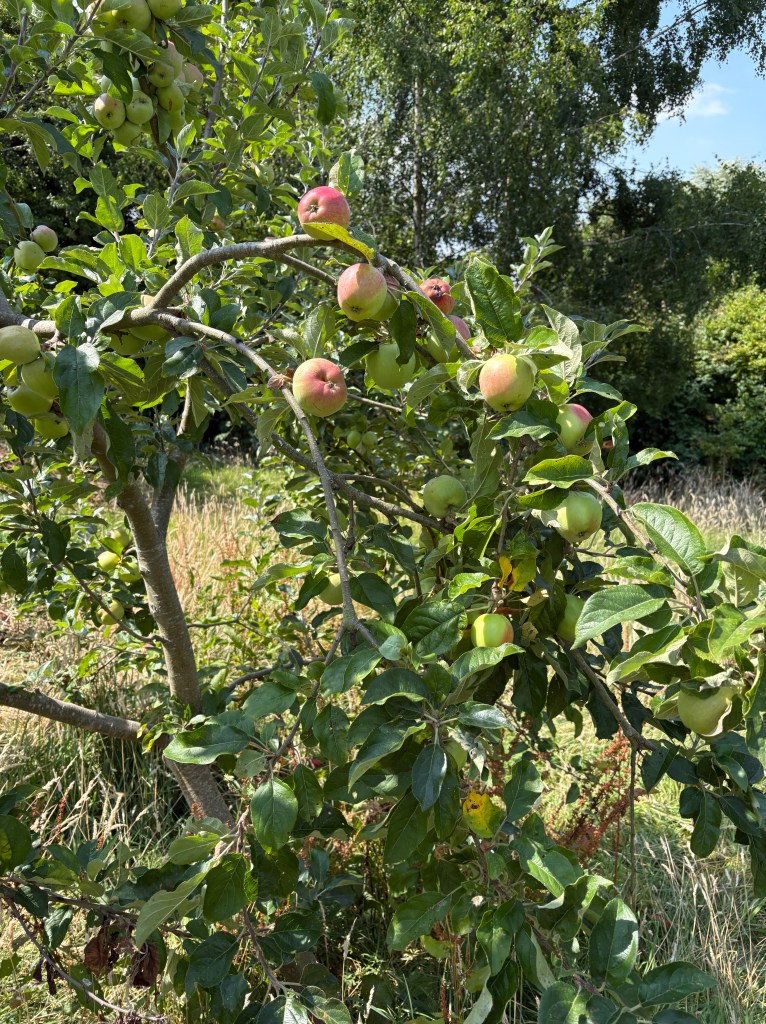
Eventually we reach a consensus that enough is enough. I don’t think we’ve taken as many off the trees as a proper orchardman might but there are definitely a few branches that are looking healthier. Fortunately, due to the research bungle I described earlier, I think our laziness means we just about got it right. I’ve gone to town where the apples are touching the floor and been a bit slacker where the branches seem to be coping. Dr Clifford, whom I pruned drastically a few months ago, is carrying a decent crop but less than last year. I hope I’ve not done the old boy any lasting damage. Next time I wassail, he can have an extra helping of cider.
From thirteen trees, I’ve got a haul of ten half full carrier bags. There are thirteen trees but two are duplicates and one didn’t have enough fruit to attract our attention. I pile the bags up in the stable because Barb has offered to take them home later in her car. I’ll admit I was hoping she might offer because I don’t fancy carting them around in this heat.
Our hard-ish work is done for the day so we drag up a couple of plastic chairs and sit in the shade of the stable. We have to erect a barricade to keep the horses away but when they eventually give up we’ve got the whole panoramic view to ourselves.
Naturally, in such glorious environs our conversation soon turns to moaning about the young people of today and their “don’t know they’re born” slack work habits.
“People these days don’t know what a day’s work looks like,” I say as I fill up the kettle.
“It’s a shame,” says Stephen. “Work is good for you.”
Obviously neither of us has done a day’s work in living memory but we don’t let that get in the way of our pontificating. I pass the biscuits and sit down to enjoy my brew. Swallows swoop and circle through the sky and every few minutes a dog hurtles along the canal towpath living its best life. What absolute bliss. If this is work, don’t ever let me rest.


Leave a comment